

Tag: restaurant pos software

blog

KDS in Restaurants: The Secret Ingredient to Faster Orders and Happier Customers

It’s a typical Friday night rush at a busy restaurant. Orders are flying in, the front-of-house (FOH) team is scribbling tickets, and the back-of-house (BOH) kitchen staff is hustling to keep up. Suddenly, a missed “no-onion” modifier slips through. Two tables are left waiting, the chef is frustrated, and the manager is running back and forth trying to control the chaos. This is the everyday struggle of many restaurants still relying on paper tickets or kitchen printers. They’ve tried pep talks, more staff, even extra printers, but mistakes keep happening.

Now imagine a different scene: every order instantly appears on a digital kitchen display system (KDS), modifiers are clearly highlighted, and the kitchen runs in perfect sync. FOH doesn’t need to shout across the counter; BOH knows exactly what to prepare next. The result? Faster orders, fewer errors, and happier customers.

What Is a KDS in a Restaurant?

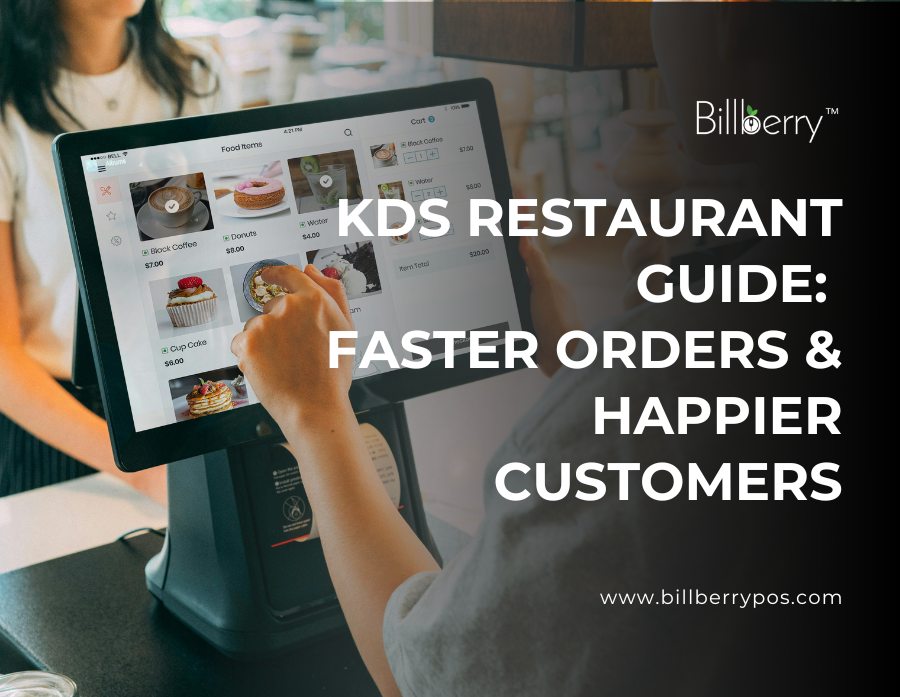
A Kitchen Display System (KDS) is a digital kitchen display that replaces paper tickets or kitchen printers. Instead of printing order chits, every order from your restaurant POS software with KDS integration appears on a screen inside the kitchen. The system not only routes orders to the right stations but also timestamps them, highlights modifiers, and helps the kitchen track progress in real-time.

Think of it as a restaurant order management system designed specifically for the BOH, ensuring FOH and BOH communication stays smooth and error-free.

Step-by-Step Flow of a KDS Restaurant

Here’s how a typical KDS restaurant workflow looks:

~ Order Captured in POS – Dine-in, takeaway, or online orders flow directly from the POS.

~ Auto-Routed to Stations – Burgers go to the grill, salads to cold prep, desserts to the pastry counter.

~ Color-Coded Timers – Orders change color as they age (e.g., green & red).

~ Bump/Recall Feature – Chefs can “bump” an order when completed or recall it if needed.

~ Expo Screen Coordination – A central screen ensures the right dishes leave the kitchen together, improving food service efficiency.

This ticketless kitchen approach eliminates confusion and saves valuable minutes during peak hours.

Benefits for FOH (Front-of-House)

~ Real-time order status: Servers can check progress instantly instead of interrupting the chef.

~ Accurate ETAs: Guests get reliable waiting times, improving the dining experience.

~ Fewer calls to the kitchen: Less shouting across counters, smoother workflow.

~ Happier customers: Faster service + fewer errors = better reviews and repeat business.

Benefits for BOH (Back-of-House)

~ Clear queue visibility: Chefs see exactly what’s next and how urgent it is.

~ Modifiers & allergens highlighted: “Extra cheese” or “no nuts” is displayed clearly, no room for error.

~ Prep-time pacing: Helps balance workload during rush hours.

~ Fewer reworks and wastage: Accuracy reduces costly mistakes.

KDS vs. Kitchen Printers

Many restaurants still rely on kitchen printers, but here’s the comparison:

Kitchen Printers:

Pros: Simple, cheap, works offline, familiar to staff.

Cons: Paper jams, constant refill costs, hard to track order status, prone to missed tickets.

Kitchen Display System (KDS):

Pros: Real-time visibility, no paper cost, easy order tracking, analytics and reporting, improved FOH↔BOH communication.

Cons: Requires screens/hardware and initial training.

When do printers still make sense? For backup printing or stick-on labels for takeaway packaging. Many modern restaurants actually use a hybrid setup: KDS + selective printers.

Also check: FMS for Franchise Food Businesses

Fit by Format

A KDS restaurant system adapts to different formats:

1. QSRs: Speed and volume, keeps up with fast order cycles.

2. Casual Dining: Helps coordinate courses (starters, mains, desserts).

3. Cloud Kitchens: Balances multiple aggregator orders without mix-ups.

4. Multi-Outlet Chains: Standardizes processes and gives managers central oversight.

Change Management Essentials

Installing screens is easy; changing habits is harder. Success depends on:

~ Menu hygiene: Keep menus updated and well-structured in POS.

~ Modifier discipline: Standardize how FOH enters requests like “extra spicy.”

~ Kitchen screen placement: Install screens where chefs can see them clearly without breaking workflow.

~ Chef onboarding: Short training ensures everyone adopts the new system without resistance.

Reliability & Hardware Options

To ensure your KDS restaurant runs smoothly, consider:

~ Hardware types: Tablets for smaller kitchens, mounted screens for larger ones.

~ Bump bars: Hardware buttons that make it easy for chefs to “bump” orders without touching the screen with greasy hands.

~ Offline queuing: Orders stay in the system even if the internet drops (crucial for Indian restaurants).

~ Power backup: Avoid downtime with UPS or inverter support.

~ Durability: Screens designed to withstand heat, steam, and grease.

Reference Architecture

Think of Billberry POS as the order brain of your restaurant. Every order, whether dine-in, takeaway, or from food aggregators, flows seamlessly into the POS. From there:

~ KDS screens at each kitchen station display the right items to the right chef.

~ An expo screen helps coordinate final plating and dispatch.

~ An optional label printer can generate packaging stickers for takeaways and deliveries.

This ecosystem ensures that your KDS restaurant workflow stays connected end-to-end, eliminating confusion and miscommunication.

Implementation Plan (2-Week Playbook)

Rolling out a new system doesn’t have to disrupt your operations. Here’s how Billberry POS with KDS integration typically goes live:

Day 1–2: Pilot Scope & Hardware Setup

Identify pilot outlet or station.

Check Wi-Fi coverage, mount screens, ensure UPS for power backup.

Day 3–5: Software Configuration

Map menu categories to kitchen stations.

Define modifiers, allergens, and prep times.

Set routing rules for FOH↔BOH communication.

Day 6–7: Dry Runs & Training

Simulate peak-hour orders in off-hours.

Train chefs, cashiers, and managers.

Provide quick-reference cards at each station.

Go-Live Weekend

Shadow support from Billberry’s team.

Rollback plan ready (rarely needed).

Post-shift review to resolve gaps quickly.

Week 2: Fine-Tuning

Adjust prep times based on real usage.

Balance load across stations.

Activate auto-throttle for aggregator orders to prevent kitchen overload.

KPI Dashboard & Continuous Improvement

Once live, Billberry KDS doesn’t just display orders, it generates insights:

~ Ticket time histogram: See average preparation time trends.

~ Station utilization: Know which kitchen sections are overloaded.

~ Error heatmap: Identify items or modifiers with the most mistakes.

~ Bump age alerts: Track overdue tickets before service suffers.

These dashboards make your restaurant not just faster, but smarter.

ROI Model

Here’s how restaurants see measurable ROI from a KDS restaurant setup with Billberry POS:

~ Paper savings: No more endless rolls of printer paper.

~ Re-fire reduction: Fewer wrong orders means less wastage.

~ Table turns: Faster service means more guests served per shift.

~ Delivery promise: Better accuracy → fewer cancellations or refunds.

~ Staff efficiency: Reduce overtime by streamlining kitchen workflows.

~ In short: better margins, happier customers, and smoother operations.

Scale-Up Across Outlets

One of the biggest advantages of Billberry POS with KDS is scalability:

~ Roll out to your second outlet with the same configuration.

~ Push central menu updates to all branches in one click.

~ Standardize SOPs across locations.

~ Manage seasonal menu switches without retraining every chef.

~ Give HQ visibility into all outlets with centralized reporting.

This is how single-outlet restaurants transform into multi-outlet brands without losing control.

Integrations & Edge Cases

Billberry KDS is designed for real-world restaurant complexities:

~ Aggregator integration: Zomato, Swiggy, UberEats orders flow directly into the KDS.

~ Online ordering sync: Keep FOH and BOH aligned on website/app orders.

~ Bulk party orders: Efficiently split orders across stations.

~ Ready vs. Preparing codes: Color-coded differentiation reduces confusion at dispatch which is red for preparing and green for ready.

With these built-in features, your kitchen runs like clockwork, even under pressure.

Also Read:

Objections & Honest Answers: Educate + De-risk

Even when restaurant owners see the promise of a Kitchen Display System (KDS), a few doubts naturally pop up. That’s fair, chefs and managers have relied on paper tickets and kitchen printers for decades. Let’s tackle these common objections honestly:

“Chefs Prefer Paper”

Chefs often like the tactile feel of a ticket they can hold or pin up. A good KDS respects that workflow by offering tactile bump bars that simulate the action of “crossing off” a ticket. Large, clear fonts and customizable layouts make it just as easy to scan orders as paper. Plus, with a two-shift training plan, most kitchens find their team adjusts within days, not months.

“Will It Work in a Hot, Greasy Kitchen?”

Yes, if set up properly. Modern KDS hardware is designed for rugged conditions. With protective screen covers, sturdy mounts, and grease-resistant materials, these systems can withstand heat and splatter. Combine that with regular cleaning SOPs, proper airflow, and smart placement away from direct flames, and you have a reliable screen that keeps running through the busiest service.

“What If Internet Drops?”

This is one of the biggest fears. The good news? A KDS doesn’t collapse just because your internet does. It primarily runs on your local network first, keeping orders flowing even if external connectivity fails. Many setups also have offline queuing, so orders continue to be recorded and auto-sync once the connection is back. Add a UPS (uninterrupted power supply) and your kitchen won’t skip a beat during outages.

Closing (Story Payoff)

Let’s return to that Friday night rush we imagined earlier. Tickets are flying in, FOH staff are nervous, and the kitchen is running hot. But this time, something feels different.

The expo screen quietly organizes the chaos. Orders are automatically routed, timers keep the line moving, and the pass is paced to perfection. FOH servers glance at the screen and confidently give guests accurate ETAs. That “no-onion” dish? It shows up exactly right the first time, no remake, no delay, no angry guest.

The room that once felt frantic now feels focused. The kitchen runs like a well-oiled machine. And the best part? The team isn’t stressed, they’re in control.
Make your KDS restaurant the calm in the chaos, powered by Billberry POS!

10 Proven Restaurant Marketing Techniques to Boost Your Sales in 2026!

In the world of food, taste brings them in once, but marketing keeps them coming back. For restaurant owners in 2026, surviving on footfall alone is no longer sustainable. With digital menus, instant delivery, and customers who scroll before they stroll, marketing has become the backbone of restaurant success. Whether you’re running a single outlet or managing a growing chain, knowing how to promote your brand is just as important as what’s on your menu. Let’s check out some restaurant marketing techniques!

Why Marketing is Non-Negotiable for Restaurant Success

Gone are the days when good food and word of mouth were enough. Today’s diners expect convenience, engagement, and experiences, all before even stepping into your restaurant. If your brand isn’t visible on Google, Instagram, or delivery platforms, you’re invisible to your next customer.

A strong marketing plan helps you:

~ Drive more orders (online and offline)

~ Build a loyal customer base

~ Stay ahead of competition (and algorithm changes)

~ Turn casual diners into regulars

What Makes 2026 Different?

The way people discover and choose where to eat has changed dramatically. Here’s what’s shaping restaurant marketing in 2026:

~ Tech shifts: AI is influencing everything from personalized offers to automated replies. POS systems and analytics tools are smarter and easier to use.

~ Delivery-first behavior: With Swiggy, Zomato, and ONDC growing rapidly, customers often experience your brand before they taste your food.

~ Short-form content dominance: Reels, Stories, and WhatsApp statuses are now key brand touchpoints.

~ Data-backed decisions: No more guesswork, restaurants that track customer behavior through digital tools are seeing higher ROI on every rupee spent.

In this blog, we’ll explore 10 powerful marketing techniques that are actually working for restaurants in 2026, with tips to help you implement them without needing an agency or a massive budget.

Let’s dive in.

Optimize Your Google Business Profile

When someone searches “best biryani near me,” Google decides whether your restaurant shows up, and your Google Business Profile (GBP) is what makes or breaks that decision.

Why Local SEO for restaurants Matters?

Local SEO is the new footfall. A well-optimized Google Business Profile helps you:

~ Appear in the top 3 “map pack” listings

~ Show updated info like hours, menu, and delivery options

~ Collect reviews that influence new customers instantly

How to Improve It:

~ Use keywords in your business description (e.g., “pure veg restaurant in Ahmedabad”)

~ Post updates weekly, show specials, events, or even Reels

~ Collect reviews through QR codes placed on tables or bill folders

~ Respond to every review, especially the bad ones, it shows you’re active and care

Pro Tip: Add high-quality food and ambience photos regularly. Google rewards engagement.

Use Instagram Reels and Stories

In 2025, if it’s not on Reels, it didn’t happen.

Instagram is no longer just a pretty feed, it’s your 24/7 branding engine. Stories and Reels give you direct access to your audience’s attention daily.

What to Post:

~ Behind-the-scenes: Chef plating dishes, staff prepping for service, morning chai moments

~ Trending audio + food visuals: Match delicious shots with trending sounds for higher reach

~ Customer reactions: Capture bite moments, birthday celebrations, or genuine testimonials

~ Quick recipes or “1-minute prep” reels: Perform great with foodies and home cooks

Keep it authentic. Don’t aim for perfection, aim for emotion and relatability.

Collaborate with Food Influencers

Influencers are today’s food critics, but way more relatable.

Whether you’re in a metro or a Tier-2 town, there are creators with loyal audiences looking for new food experiences.

Micro vs Macro:

~ Micro influencers (5k–50k followers) are hyperlocal and cost-effective

~ Macro influencers (100k+) offer broader reach but need a bigger budget

How to Partner the Right Way:

~ Offer them a custom experience: a tasting menu, behind-the-scenes tour, or meet-the-chef

~ Discuss expectations beforehand: Will they post a Reel? Story? Review?

~ Encourage authentic content, not scripted ads

Bonus: Track results using promo codes or dedicated booking links.

Loyalty Programs That Actually Work

A full restaurant is great, but a restaurant full of returning customers is even better.

That’s where loyalty programs come in. But in 2026, the paper punch cards are gone. What works now are tech-enabled rewards tied to real customer behavior.

Tech-Enabled Loyalty Ideas:

~ Offer cashback or points on every order via your POS or app

~ Send milestone rewards (e.g. “5th visit = free dessert”)

~ Use QR codes on tables or bills for customers to check points instantly

Why Data is Gold:

~ Track who your repeat customers are

~ See what they order, when they visit, and what rewards convert them

~ Use this data to personalize offers that feel thoughtful, not spammy

Tools like Billberry POS, offer in-built loyalty features that integrate seamlessly with billing and delivery.

Run Geo-Targeted Ads

If your restaurant is in Bandra, there’s no point showing ads to people in Borivali.

Geo-targeted ads let you speak directly to hungry customers nearby, whether on Google, Instagram, or Facebook, at the exact moment they’re looking for food.

Google & Meta Ads Tips:

~ Use location-based keywords like “late-night Chinese near Ghatkopar”

~ Add a call extension so customers can tap-to-call directly

~ For Meta (Instagram/Facebook), use “Get Directions” or “Order Now” CTAs

Budgeting Smartly:

~ Set radius targeting: 3–5 km around your outlet

~ Run ads during peak times (lunch/dinner hours)

~ Start small (₹200–₹500/day) and scale based on what performs

Bonus Tip: Use eye-catching creatives with your best dishes + social proof (“Rated 4.8 stars by 300+ foodies”).

SMS & WhatsApp Promotions

Even in the era of Reels and AI, nothing beats a well-timed SMS or WhatsApp message.

The open rates? Still unbeatable.
The conversion rate? Even better when paired with offers.

What to Send:

~ Flash deals: “20% off today only!”

~ Event invites: “Live music this Friday at our rooftop”

~ Personal messages: “Hi Raj, your favorite pizza is back!”

Compliance & Best Practices:

~ Always get opt-in consent (via QR forms or during billing)

~ Send messages at the right time (avoid early morning or late night)

~ Use templates with personalization tags (Name, Favorite Dish, Last Visit)

~ You can use platforms like Wati, Textlocal, or POS-integrated tools like Billberry CRM to automate this.

Optimize for Swiggy & Zomato

swiggy zomato logo analysis

When customers are scrolling through endless options on Swiggy and Zomato, you want your restaurant to stand out and rank higher, not hide at the bottom.

Optimizing your delivery platform presence is one of the most overlooked restaurant marketing techniques in 2025.

How to Rank Higher:

~ Maintain accurate menus, timings, and photos

~ Use popular keywords in your item names (e.g., “Butter Garlic Naan – Most Ordered”)

~ Ensure quick response times to avoid penalties

~ Encourage happy customers to rate you within the app

Use Discounts Strategically:

~ Offer limited-time deals on low-traffic days

~ Use combo offers to increase average order value

~ Track which discounts convert, and avoid over-discounting

Tip: A well-optimized Zomato/Swiggy listing is free organic marketing, treat it like a second storefront.

Read: The Journey Of Swiggy and Zomato

Host In-House Events & Experiences

People don’t just go out to eat, they go out for experiences.

One of the most powerful restaurant marketing techniques that builds both loyalty and buzz is hosting engaging in-house events that make people want to return and tell their friends.

What You Can Host:

~ Live music nights to attract weekend footfall

~ Open mic events that turn your space into a cultural hub

~ Chef’s Table nights where guests experience curated tasting menus

How to Market Them:

~ Create countdown posts on Instagram Stories

~ Promote via WhatsApp broadcast lists

~ Partner with local event pages or influencers to spread the word

Bonus: Capture content during these events to reuse in Reels and ads.

Monitor & Adjust with Analytics

Even the best restaurant marketing techniques fail if you’re not tracking what works. Guesswork is out, data-backed decision-making is in.

Whether it’s understanding your most profitable menu item or the best day to run offers, analytics turn insights into action.

Key KPIs to Track:

~ Daily sales and footfall

~ Repeat customer rate

~ Cost per order (especially from online platforms)

~ Offer redemption rates

Tools That Help:

~ Petpooja’s Analytics Dashboard

~ Billberry POS Insights

~ Google My Business metrics (calls, directions, views)

~ Instagram & Meta ad manager insights

~ Use these tools weekly to refine your campaigns, adjust offers, and double down on what’s working.

Powered Growth Starts with the Right Tools

Great restaurant marketing techniques will bring people to your door, but what happens after that determines whether they’ll come back. That’s where Billberry POS becomes your growth partner, not just your billing software.

From collecting customer data for personalized loyalty rewards to tracking sales trends, managing inventory, and automating promotions on WhatsApp or SMS, Billberry is built to help you market smarter, serve faster, and grow consistently.

Why Restaurants Choose Billberry?

Built for the food industry — Whether you’re a QSR, cloud kitchen, or fine dining outlet

Integrated loyalty & CRM — Run targeted campaigns and retain customers

Delivery-friendly — Works seamlessly with Swiggy/Zomato workflows

Data-rich reports — Make every marketing move based on real-time numbers

Multi-outlet ready — Designed to scale with your brand

Promotions Made Easy:

~ Launch geo-targeted offers right from your dashboard

~ Send personalized SMS/WhatsApp campaigns

~ Track which promo codes and ads actually bring footfall

Ready to Grow Your Restaurant in 2026?

Marketing doesn’t stop at likes and clicks, it continues at the billing counter, in the kitchen, and through every repeat order.
Billberry POS ties it all together so your entire business runs like your first outlet, efficient, data-driven, and customer-first.

Book your FREE DEMO today and get a custom strategy for your restaurant!

The Hidden Cost of Choosing the Wrong Restaurant POS!

In the world of food and hospitality, margins are razor-thin, customer expectations are sky-high, and competition is relentless. Amidst all this, the Restaurant POS system becomes more than just a billing tool, it becomes the central nervous system of your restaurant business.

Yet, many food entrepreneurs fall into the trap of choosing a POS based on just one question: “Can it print bills and manage basic sales?”

But here’s the truth:
A wrong POS doesn’t just underperform, it silently bleeds your business.

Let’s go deep into what those hidden costs actually look like, and why a good restaurant POS should be considered a long-term investment, not a short-term expense.

Time Wasted is Money Lost, The Operational Sinkhole

Imagine your staff fumbling through slow-loading interfaces or misplacing orders because of clunky software. Every second spent on trying to figure out a complicated restaurant POS adds friction to your service workflow.

This bottleneck becomes brutal during peak hours. A few seconds of delay per customer builds up into long queues, frustrated customers, and overwhelmed staff.

🚫 Hidden Cost:
Lower table turnover = fewer customers served

Delayed orders = bad reviews

Over time? A dent in your brand experience

A smooth POS makes fast service feel effortless, and that’s what customers remember.

You Can’t Grow What You Can’t Measure

A basic POS will show you how much you sold. But a growth-focused restaurant doesn’t just care about how much, it needs to know what’s working and what’s not.

Without detailed reporting like:

~ Product-level profitability

~ Ingredient usage trends

~ Staff-wise order handling

~ Peak time analytics

~ Inventory wastage tracking

…you’re essentially driving blind.

🚫 Hidden Cost:

~ Poor decisions based on assumptions, not data.
~ Which dishes are bleeding you dry?
~ Which hours need more staff?
You’ll never know without the right POS.

When Systems Don’t Talk, You Lose Sync

A modern restaurant isn’t just a kitchen and a counter. It’s a digital ecosystem:

~ Online aggregators (Swiggy, Zomato)

~ QR-based ordering

~ UPI & digital payment gateways

~ Loyalty apps

~ Kitchen Display Systems (KDS)

If your POS doesn’t integrate with these, you’re the glue. Manually reconciling orders, cross-checking payments, and juggling between apps takes time, and increases the risk of human error.

🚫 Hidden Cost:
More manpower needed, more stress for managers, more chances of missed orders and revenue leakages.

Your POS Can Make or Break Your Staff


Your POS is also your team’s everyday tool, from cashiers to waitstaff to kitchen crew. A non-intuitive system frustrates them. That frustration leads to errors, delays, and ultimately… resignations.

Training becomes harder, especially if you face high staff turnover. You’ll spend days teaching every new employee a complicated process, instead of letting them serve efficiently from day one.

🚫 Hidden Cost:

~ Staff burnout

~ High churn rate

~ Service inconsistencies

More training time = less time on the floor

Lack of Control = Nightmare for Multi-Outlet Businesses

Let’s say your first outlet is booming. You want to open a second, or start a franchise.

That’s when most restaurateurs hit a wall, their POS was never built for scale.

If your restaurant POS doesn’t offer cloud access, centralized control, real-time outlet-level data, and user-based permission settings, you’re stuck manually chasing updates, data, and problems across outlets.

🚫 Hidden Cost:

~ Loss of operational visibility

~ Franchise inconsistency

~ Poor brand reputation

Slower decisions = slower growth

Bad Customer Experience = Long-Term Brand Damage

restaurant pos | Petpooja

Modern diners expect digital convenience:

~ Quick ordering

~ Instant digital bills

~ Loyalty rewards

~ Online payment links

~ Feedback capture

A limited POS makes these features impossible, or only available through expensive third-party add-ons.

🚫 Hidden Cost:
You lose repeat business and valuable customer insights, all of which affect your brand perception and loyalty.

✅ What Does a Good POS Look Like?
Instead of asking “What features does it have?”, ask:

“What problems can this POS solve, today, and when I grow?”
Look for:

~ Cloud-based control

~ Real-time reporting

~ Multi-outlet scalability

~ Kitchen & inventory sync

~ Aggregator and payment integration

~ User-friendly interface for your team

~ Franchise-ready framework

Don’t Just Choose a Restaurant POS. Choose a Partner in Growth.

At the heart of a great restaurant is a great system, one that empowers your team, adapts to your vision, and works as hard as you do.

A smart POS helps you:

~ Save time

~ Reduce errors

~ Make smarter decisions

~ Scale faster

~ Offer better customer experiences

Also read: How to Register a Food Business in India: Complete Guide

POS Software vs. Accounting Software: Key Differences & Best Choice for Your Business

Need a POS built for ambitious food businesses?

BillBerry POS is designed to do more than just billing.
It gives you centralized control, franchise readiness, insightful analytics, and daily operational support, all in one place.

Let your POS do the heavy lifting, so you can focus on building the restaurant of your dreams.

📞 Book a free demo & see why brands trust BillBerry to grow without friction.

How to Register a Food Business in India: Complete Guide

Launching a food business can be an exhilarating journey filled with creativity and passion for culinary delights. However, before you can start serving up your signature dishes, it’s essential to navigate the often complex landscape of legal requirements. From obtaining the necessary licenses to ensuring compliance with health and safety regulations, understanding how to register your food business is crucial for laying a strong foundation. This step-by-step guide will walk you through the entire registration process, making it easier than ever to adhere to legal protocols and get your venture off the ground. Whether you’re a budding chef dreaming of a food truck or an entrepreneur ready to open a restaurant, we’ll provide the insights you need to ensure your food business is not only thriving but also legally compliant. Let’s dive in and turn your culinary dreams into a legally sanctioned reality!

Why Food Business Registration is Essential for Success

Starting a food business is an exciting journey, but before you dive into serving delicious meals, there’s a crucial step you cannot afford to ignore, food business registration. It’s not just a legal formality; it lays the foundation for a compliant, credible, and scalable business. Proper registration ensures you operate within legal boundaries, maintain high food safety standards, and unlock growth opportunities. Here’s why registering your food business is a must:

1. Legal Compliance & Business Protection

~ Ensures your business operates within local, state, and federal regulations.

~ Protects against legal actions and penalties due to non-compliance.

~ Establishes credibility and trust among customers, leading to better patronage.

2. Ensuring Food Safety & Public Health

~ Helps maintain hygiene and prevent foodborne illnesses.

~ Demonstrates commitment to adhering to food safety standards.

~ Subjects businesses to regular inspections, ensuring high-quality standards.

~ Meets consumer demand for transparency in food sourcing and handling.

3. Business Growth & Opportunities

~ Access to government grants, loans, and support programs.

~ Legally allows hiring employees and entering into contracts.

~ Facilitates business expansion and intellectual property protection.

~ Provides a structured framework for dispute resolution.

Registering your food business is more than just a legal requirement, it is a step towards credibility, safety, and sustainable growth.

Types of Food Business Licenses and Permits

Starting a food business involves obtaining various licenses and permits to ensure legal compliance and smooth operations. The specific requirements depend on the type of food business, whether it’s a food truck, restaurant, or home-based catering service. Here’s a breakdown of the essential licenses and permits you may need:

1. General Business License

~ The first step in making your business official.

~ Issued by the local city or county government.

~ Grants permission to operate within a specific jurisdiction.

2. Health Department Permit

~ Ensures compliance with health and safety regulations.

~ Requires regular inspections to verify food handling, storage, and sanitation practices.

~ Essential for maintaining hygiene and preventing foodborne illnesses.

3. Food Handler’s Permit

~ Required for anyone involved in food preparation and handling.

~ Ensures staff members are trained in food safety procedures.

~ Helps prevent contamination and food safety violations.

4. Seller’s Permit

~ Necessary if selling taxable goods.

~ Issued by the state’s tax authority.

~ Allows collection of sales tax from customers.

5. Additional Permits (Based on Business Needs)

~ Liquor License – Required if serving alcohol.

~ Zoning Permit – Ensures compliance with local zoning laws for business location.

~ Mobile Vendor Permit – Needed for food trucks and street vendors.

Understanding and securing the right licenses and permits is crucial for avoiding legal issues and ensuring the successful operation of your food business.

Researching Your Local Regulations

Before registering your food business, it’s crucial to research and understand the regulations specific to your location. Since rules vary across different regions, being well-informed can save time and prevent legal complications. Here’s how you can effectively research your local food business regulations:

1. Check Official Government & Health Department Websites

~ Visit your local government or health department website.

~ Find detailed information on required licenses, permits, and compliance regulations.

~ Look for contact details of local officials who can provide guidance.

2. Connect with Local Business Associations

~ Reach out to local chambers of commerce and business associations.

~ Gain insights from experienced entrepreneurs and industry experts.

~ Attend workshops, seminars, and networking events for firsthand knowledge.

3. Consult a Legal Professional

~ Seek advice from a lawyer specializing in food business regulations.

~ Ensure compliance with all legal requirements, especially if operating in multiple jurisdictions.

~ Understand complex legal terms and avoid common regulatory pitfalls.

By conducting thorough research and seeking expert advice, you can navigate the registration process smoothly and build a strong foundation for your food business.

Preparing Your Business Plan

how to register a food business

A well-structured business plan is essential for launching and managing a successful food business. It acts as a roadmap, helping you define goals, understand your market, plan operations, and secure funding. Here’s how to prepare a comprehensive business plan:

1. Define Your Business Concept

~ Identify the type of food business (restaurant, food truck, catering, bakery, etc.).

~ Outline your cuisine, unique selling points, mission, and vision.

~ Conduct a target market analysis, who are your ideal customers and what are their preferences?

2. Develop an Operational Plan

~ Determine your business location and required equipment.

~ Plan staffing requirements and daily operations.

~ Set up inventory management, ingredient sourcing, and food safety procedures.

3. Create a Marketing Strategy

~ Define how you will attract and retain customers.

~ Choose marketing channels (social media, local advertising, word-of-mouth, etc.).

~ Develop brand awareness strategies to stand out in the competitive food industry.

4. Outline Your Financial Plan

~ Estimate startup costs, operational expenses, and projected revenue.

~ Conduct a break-even analysis to understand profitability timelines.

~ Identify potential risks and financial challenges.

A well-prepared business plan not only helps you stay organized but also improves your chances of securing funding and ensuring long-term success.

Choosing Your Business Structure

Selecting the right business structure is a crucial decision that impacts your legal responsibilities, financial obligations, and long-term business growth. Below are the most common business structures for a food business:

1. Sole Proprietorship

~ Simplest and most common structure.

~ Easy to set up with full control over the business.

~ Owner is personally liable for business debts and obligations.

~ Best for small, low-risk food businesses.

2. Partnership

~ Involves two or more owners sharing responsibilities and profits.

~ Allows for resource pooling and shared decision-making.

~ Each partner is personally liable for the business’s debts.

~ Requires a partnership agreement to avoid conflicts.

3. Limited Liability Company (LLC)

~ Combines the flexibility of a partnership with liability protection.

~ Protects personal assets from business debts.

~ Allows for pass-through taxation (business income is reported on personal tax returns).

~ Suitable for many food businesses due to its ease of setup and management.

4. Corporation

~ A separate legal entity from its owners.

~ Offers the highest level of liability protection.

~ Suitable for larger businesses or those planning to raise capital.

~ Involves more regulatory requirements, including board meetings and detailed record-keeping.

Tip: Consult a legal or financial expert to determine the best structure for your food business based on your goals and risk tolerance.

Completing the Registration Process

Once you’ve selected a business structure, follow these steps to legally register your food business:

1. Register Your Business Name

~ Choose a unique and memorable name that reflects your brand.

~ Check availability through local government databases.

~ If operating under a different name, file for a Doing Business As (DBA) registration.

2. Obtain an Employer Identification Number (EIN)

~ Required for tax purposes, hiring employees, and opening a business bank account.

~ Easily obtainable online through the IRS website.

3. File Necessary Paperwork

~ Register your business with local, state, and federal authorities.

~ Submit Articles of Incorporation (for corporations) or Articles of Organization (for LLCs).

~ Draft an Operating Agreement (for LLCs) or a Partnership Agreement (for partnerships).

4. Comply with Federal Regulations (If Applicable)

~ If operating in multiple states or selling food products across state lines, check federal requirements.

~ Obtain necessary permits from agencies like the FDA (Food and Drug Administration) or USDA (U.S. Department of Agriculture).

By ensuring proper registration and compliance, you can avoid legal complications and create a strong foundation for your food business.

Health and Safety Regulations for Food Businesses

Complying with health and safety regulations is essential for any food business. These regulations are designed to protect public health and ensure that food is prepared, stored, and served safely. Failure to comply with these regulations can result in fines, legal action, and damage to your business’s reputation.

Start by familiarizing yourself with the health and safety regulations in your area. These regulations are typically set by local health departments and may vary depending on the type of food business you operate. Common requirements include maintaining clean and sanitary facilities, properly storing and handling food, and ensuring that all employees are trained in food safety practices.

One of the most critical aspects of food safety is proper food handling. This includes practices such as washing hands and surfaces regularly, avoiding cross-contamination, cooking food to the correct temperature, and storing food at safe temperatures. These practices help prevent foodborne illnesses and ensure that the food you serve is safe for consumption.

In addition to food handling, maintaining a clean and sanitary facility is crucial for food safety. This includes regular cleaning and sanitizing of all equipment, utensils, and surfaces, as well as proper waste disposal. Regular inspections by health department officials will help ensure that your facility meets the required standards.

Employee training is another important aspect of health and safety compliance. All employees who handle food should be trained in basic food safety practices, and this training should be updated regularly. Some jurisdictions may require food handler’s permits or certifications for employees, so be sure to check the requirements in your area.

By strictly adhering to health and safety regulations, you can protect your customers, employees, and business. Regularly review and update your food safety practices to ensure that you are always in compliance with the latest regulations.

Obtaining Necessary Inspections and Certifications

Securing the right inspections and certifications is a critical step in ensuring your food business meets health, safety, and legal requirements. Compliance helps protect your customers, build trust, and avoid penalties or shutdowns.

1. Schedule a Health Department Inspection

Contact your local health department to schedule an inspection.

Inspectors will assess:

~ Food storage & handling practices.

~ Facility cleanliness & sanitation.

~ Employee hygiene & training compliance.

If violations are found, you must address them and pass a follow-up inspection.

2. Obtain Industry-Specific Certifications

Depending on your business type, you may need additional certifications:

~ Food Handler’s Permit: Required for employees handling food.

~ HACCP Certification: Essential for food manufacturing businesses to ensure safety.

~ Organic Certification: Required for businesses selling organic products.

~ Liquor License: If serving alcohol, apply through the Alcoholic Beverage Control (ABC) agency.

~ Food Truck Inspection: Mobile units must pass a vehicle safety & sanitation check.

3. Maintain Ongoing Compliance

~ Schedule routine health inspections to stay compliant.

~ Train staff regularly on updated food safety standards.

~ Renew licenses and permits as required by local regulations.

By staying ahead of inspections and certifications, your food business can operate legally, ensure food safety, and gain customer confidence.

Ongoing Compliance and Reporting Requirements

Compliance is an ongoing process that ensures your food business remains legally operational, financially sound, and safe for customers. Regular reporting and adherence to regulations help avoid penalties and business disruptions.

1. Regular Health & Safety Inspections

~ Scheduled & surprise inspections by health department officials.

~ Maintain cleanliness, proper food storage, and hygiene at all times.

~ Address any violations immediately to avoid fines or shutdowns.

2. Business License & Permit Renewals

~ Track expiration dates for all required licenses and permits.

~ Renew annually or biennially as per local and state regulations.

~ Missing renewal deadlines can result in penalties or business closure.

3. Financial Reporting & Tax Compliance

~ Maintain accurate financial records for tax filings.

~ Submit business tax returns (local, state, and federal) on time.

~ If applicable, report sales tax and payroll taxes regularly.

4. Employee Training & Certification

~ Ensure all food handlers have valid food safety permits.

~ Conduct ongoing training on the latest food safety standards.

~ Keep records of employee certifications and renewals.

5. Compliance with Industry-Specific Regulations

~ Stay updated with changing food laws and safety guidelines.

~ If selling organic, alcohol, or specialty foods, renew relevant certifications.

~ Follow labeling and packaging regulations for processed food products.

Why Ongoing Compliance Matters?

✅ Avoid legal troubles & penalties.
✅ Maintain a strong reputation & customer trust.
✅ Ensure smooth business operations.

By staying proactive with reporting, renewals, and inspections, you can future-proof your food business and ensure long-term success.

Ensuring Long-Term Success in Your Food Business

Starting a food business is a rewarding and exciting venture, but it requires careful planning and adherence to legal and regulatory requirements. By following the steps outlined in this guide, you can navigate the registration process and ensure that your business is compliant with all necessary regulations.

Understanding the importance of food business registration, obtaining the necessary licenses and permits, researching local regulations, preparing a detailed business plan, choosing the right business structure, and completing the registration process are all crucial steps in establishing your food business. Additionally, adhering to health and safety regulations, obtaining necessary inspections and certifications, and maintaining ongoing compliance and reporting are essential for ensuring the long-term success of your business.

Remember that compliance with legal and regulatory requirements is not just about avoiding fines and penalties; it is about building a solid foundation for your business and earning the trust of your customers. By prioritizing food safety, maintaining high standards, and staying up to date with the latest regulations, you can create a thriving and successful food business that stands the test of time.

So, whether you are a budding chef dreaming of starting a food truck, an entrepreneur ready to open a restaurant, or a home-based baker looking to turn your passion into a business, this step-by-step guide will help you navigate the complexities of food business registration and set you on the path to success. Embrace the journey, stay committed to excellence, and watch your culinary dreams become a legally sanctioned reality.

Billberry POS Ensures Compliance and Streamlines Food Business Operations

Integrating Billberry POS into your food business operations can significantly enhance efficiency, compliance, and customer satisfaction. Here’s how Billberry POS supports various aspects of managing a food establishment:​

Streamlining Business Registration and Compliance
~ Regulatory Compliance: Billberry POS assists in maintaining compliance with local health and safety regulations by providing features that monitor food safety practices and track necessary certifications.​

Efficient Operations Management
~ Fast Billing: Enhance customer service with a user-friendly interface designed for quick transactions, reducing wait times during peak hours. ​

~ Inventory & Stock Management: Monitor stock levels in real-time, receive automated alerts for low inventory, and manage procurement efficiently to minimize waste and control costs. ​

~ Customized Orders: Easily accommodate special customer requests and dietary preferences, ensuring order accuracy and enhancing customer satisfaction. ​
BillBerry POS

Financial Oversight and Reporting
~ Analytical Insights: Access detailed reports on sales, expenses, and customer behavior to make informed business decisions and identify growth opportunities. ​
BillBerry POS

~ Expense Management: Track and categorize expenses to maintain financial health and prepare for tax obligations effectively. ​

Enhancing Customer Engagement
~ Loyalty & Rewards Programs: Implement customized loyalty programs to encourage repeat business and increase customer retention. ​

~ QR-Based Ordering: Offer contactless ordering options, allowing customers to place orders directly from their smartphones, enhancing convenience and safety. ​
BillBerry POS

Multi-Outlet and Franchise Management
~ Centralized Control: Manage multiple locations seamlessly with centralized monitoring, ensuring consistency across all outlets and simplifying operations. ​
BillBerry POS

~ Supply Chain Management: Optimize your supply chain with features that ensure timely deliveries and maintain optimal stock levels across all locations.

By integrating Billberry POS into your food business, you not only streamline daily operations but also ensure compliance with regulatory standards, enhance customer satisfaction, and position your business for sustainable growth.

BOOK A FREE DEMO WITH BILLBERRY!

Best Menu Design Ideas: Top Restaurants’ Menu Design Ideas

More Than Just a Menu: How Smart Design Transforms Restaurants

A menu is one of the first things a customer interacts with at a restaurant, and it does more than just list dishes. It sets the mood, reflects the restaurant’s personality, and even influences what customers order. Good menu design ideas isn’t just about aesthetics, it’s a branding powerhouse that enhances the dining experience and increases sales.

Successful Indian restaurants don’t leave their menu design to chance. Every colour, font, and layout choice is intentional. Take Indian Accent, for example, their sleek, minimalist menu exudes sophistication, perfectly complementing their fine-dining experience. On the other hand, Haldiram’s uses bright reds and yellows, evoking energy and appetite, which align with their fast-paced service.

A premium restaurant might opt for an elegant gold-on-black theme, signaling exclusivity, while a café like Chai Point embraces a more casual, handwritten-style menu that feels warm and inviting. Even the way items are arranged, highlighting bestsellers, placing high-margin dishes at eye-catching spots, plays a key role in guiding customer choices.

From fine-dining establishments to bustling bakeries, smart menu design ensures that customers don’t just order food but connect with the brand. In this blog, we’ll explore how top Indian restaurants craft menus that not only look great but also create lasting impressions and drive business growth.

1. The Power of Menu Colour in Food Businesses

Menu colour psychology plays a crucial role in influencing customer emotions and purchase decisions. Whether it’s a bustling fast-food joint, a cozy bakery, or an upscale restaurant, businesses carefully choose colours to reflect their brand identity, food offerings, and target audience.

How Food Businesses Use Menu Colour Psychology

🍔 Fast Food: Bold & Energetic Colours

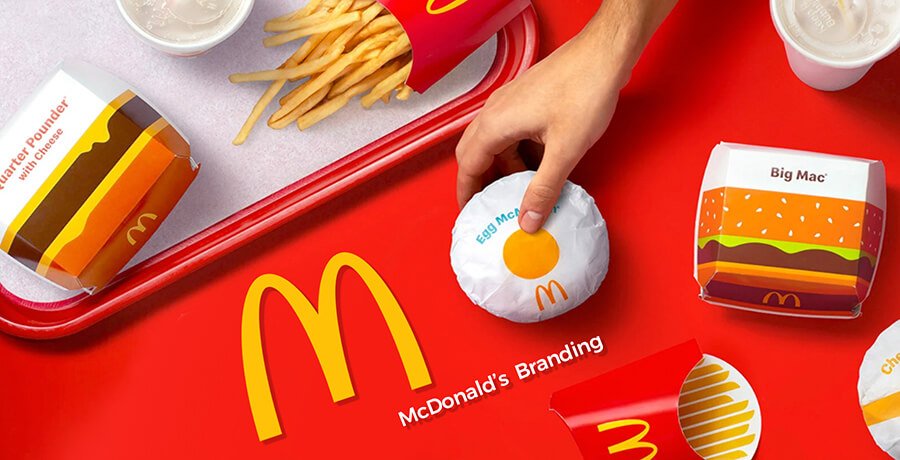
🔴 McDonald’s India – Red & Yellow for Appetite & Speed

McDonald's Logo & Branding: A Lesson For Fast Food Companies

~ Uses a high-energy red and yellow theme to stimulate hunger and create a sense of urgency.

~ Encourages quick decision-making, making it ideal for fast-moving queues.

Best for: Quick-service restaurants (QSRs) and takeaway joints.

🌮 Wow! Momo – Orange & Black for Fun & Freshness

Wow momo | food brand

~ The bright orange evokes excitement, while black adds contrast for readability.

~ Highlights bold flavors and quirky branding for an engaging experience.

Best for: Street food-inspired chains and fusion eateries.

🍰 Bakery & Café: Warm & Inviting Hues

🟠 Theobroma – Pastel & Brown for Comfort & Indulgence

Theobroma Project and its branding

~ Uses soft pastel tones and warm browns to evoke coziness and nostalgia.

~ Reinforces its identity as a comforting dessert and pastry destination.

Best for: Bakeries, cafés, and patisseries.

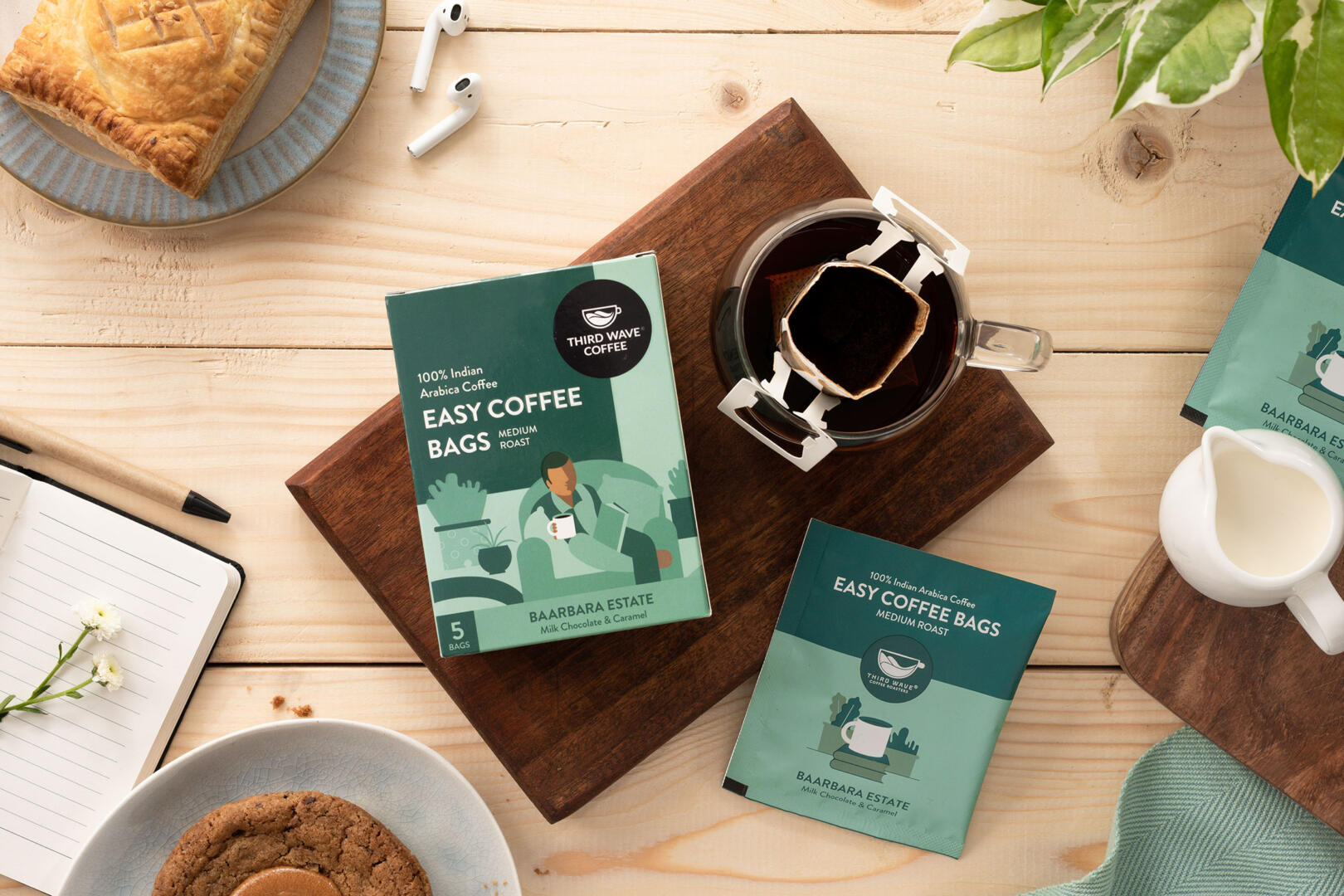
Third Wave Coffee – Earthy Greens & Browns for Artisanal Appeal

Easy Coffee Bags – Third Wave Coffee – Packaging Of The World

~ Features rich coffee browns and deep greens, representing freshness and craftsmanship.

~ Creates a relaxed atmosphere for a slow coffee experience.

Best for: Specialty coffee shops and artisanal bakeries.

🍷 Fine Dining: Luxurious & Elegant Shades

Dome, Intercontinental – Black & Gold for Exclusivity

Menu of Dome, InterContinental, Mumbai

~ A sleek black-and-gold menu reflects premium dining and an elite experience.

~ Reinforces a sense of luxury and sophistication.

Best for: High-end dining and premium lounge menus.

🍷 Taj Mahal Palace – Deep Burgundy & Ivory for Heritage & Tradition

The Taj Mahal Palace, Mumbai Logo Vector - (.SVG + .PNG) - SearchLogoVector.Com

Uses regal burgundy with ivory highlights to symbolize heritage and authenticity.

Aligns with the restaurant’s rich culinary history and fine dining appeal.

Best for: Heritage dining and five-star hotel restaurants.

Lesson: Choose a menu colour scheme that complements your food business.

1. Fast food brands thrive on bold, high-energy colours.

2. Bakeries & cafés use warm, inviting shades for a cozy feel.

3. Fine dining restaurants prefer sophisticated, luxurious tones.

A menu isn’t just about listing dishes, it’s an extension of your brand. Pick the right colours, and you’ll set the right mood for your customers!

2. Menu Design Format: Choosing the Right Layout

A well-structured menu makes it easy for customers to navigate, highlights signature dishes, and subtly guides choices. Indian restaurants use different menu design formats based on their concept and customer expectations.

Examples of Successful Indian Menu Design Formats

📖 Pind Balluchi – Traditional Scroll-Style Menu

Menu of Pind Balluchi, Karkardooma, Vivek Vihar, New Delhi | March, 2025 | Save 5%

Designed like an old Indian royal scroll, giving an authentic North Indian dining experience.

Enhances the theme of rustic, heritage-style dining.

Best for: Heritage-themed restaurants.

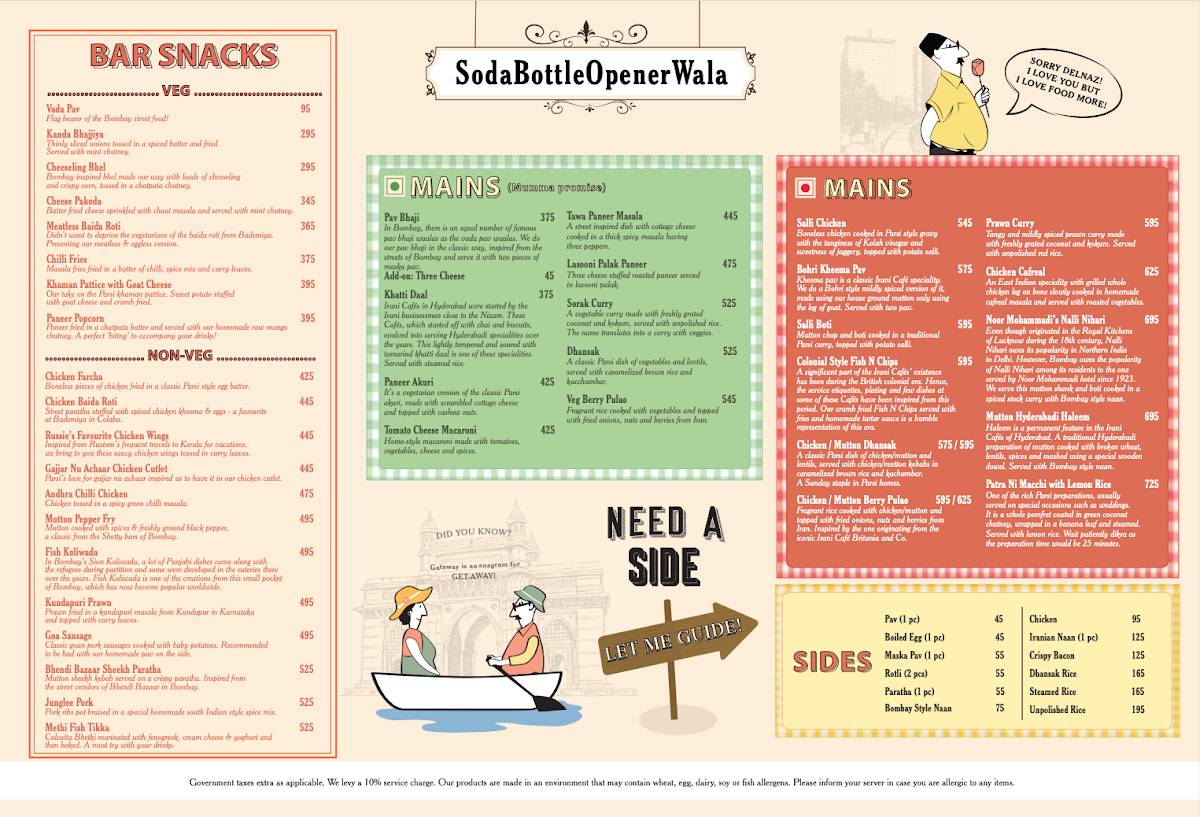
📰 SodaBottleOpenerWala – Vintage Parsi Café Menu

Menu at SodaBottleOpenerWala, Kolkata

~ Mimics a classic Irani café newspaper, with retro fonts and monochrome images.

~ Reinforces their theme of Parsi nostalgia and Bombay street food culture.

Best for: Menu design for cafes with a vintage theme.

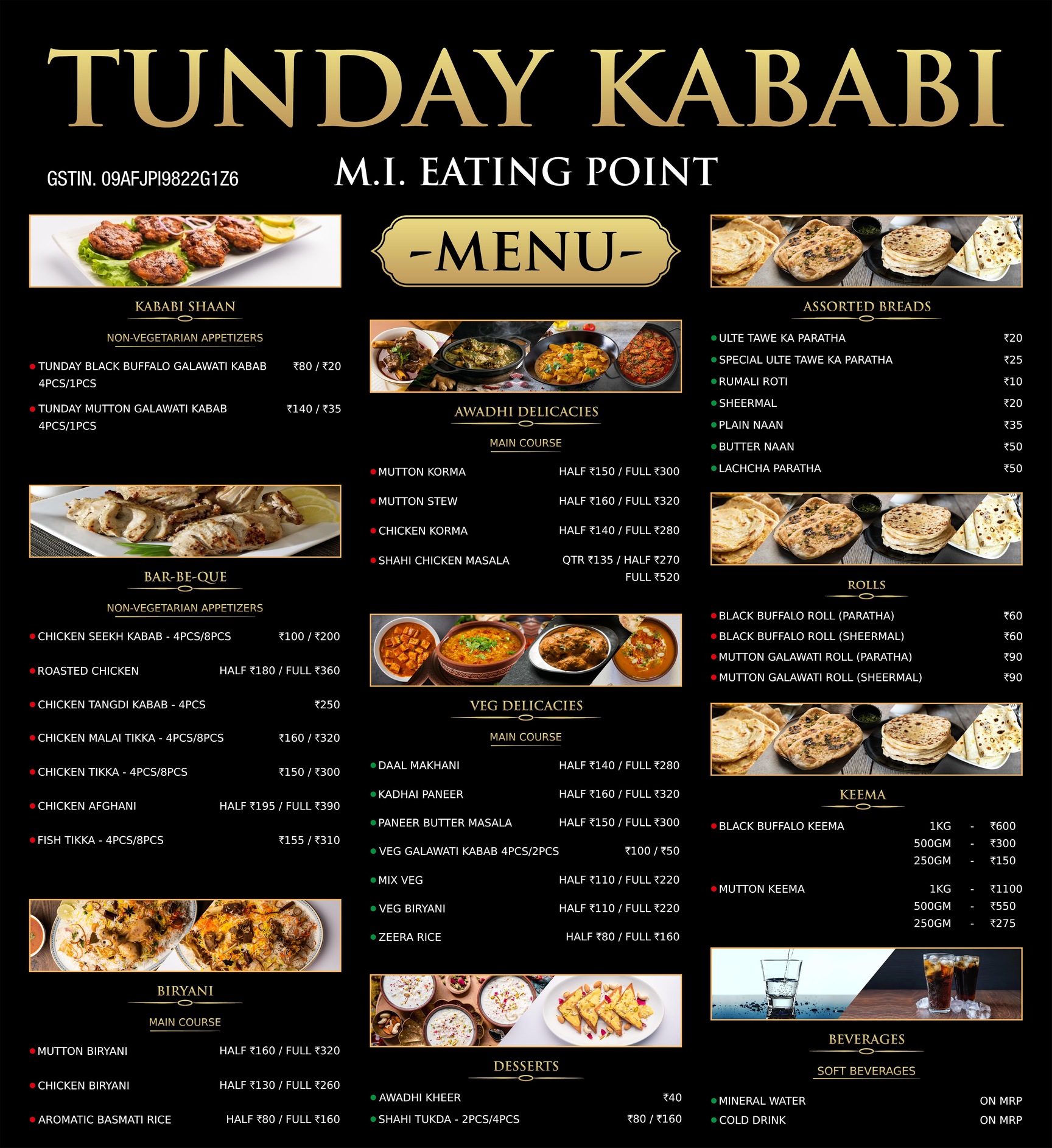
🃏 Tunday Kababi – Minimalist & Icon-Driven Menu

Tunday Kababi in Baraura Hussain Bari,Lucknow - Kebab Restaurants near me in Lucknow - Justdial

~ Uses simple text with food icons for easy navigation.

~ Focuses on signature dishes without overwhelming customers.

Best for: Menu design for fast food and quick-service restaurants.

Lesson: The menu design format should match your restaurant’s branding and make it easy for customers to engage with your offerings.

3. The Role of Fonts in Indian Restaurant Menu Design

Fonts do more than just display menu items, they shape how customers perceive a restaurant. The right typography reinforces brand identity, enhances readability, and sets the overall mood of the dining experience. Whether a restaurant aims for a regal, modern, or homely feel, font selection plays a crucial role in bringing that vision to life.

How Indian Restaurants Use Fonts in Menu Design

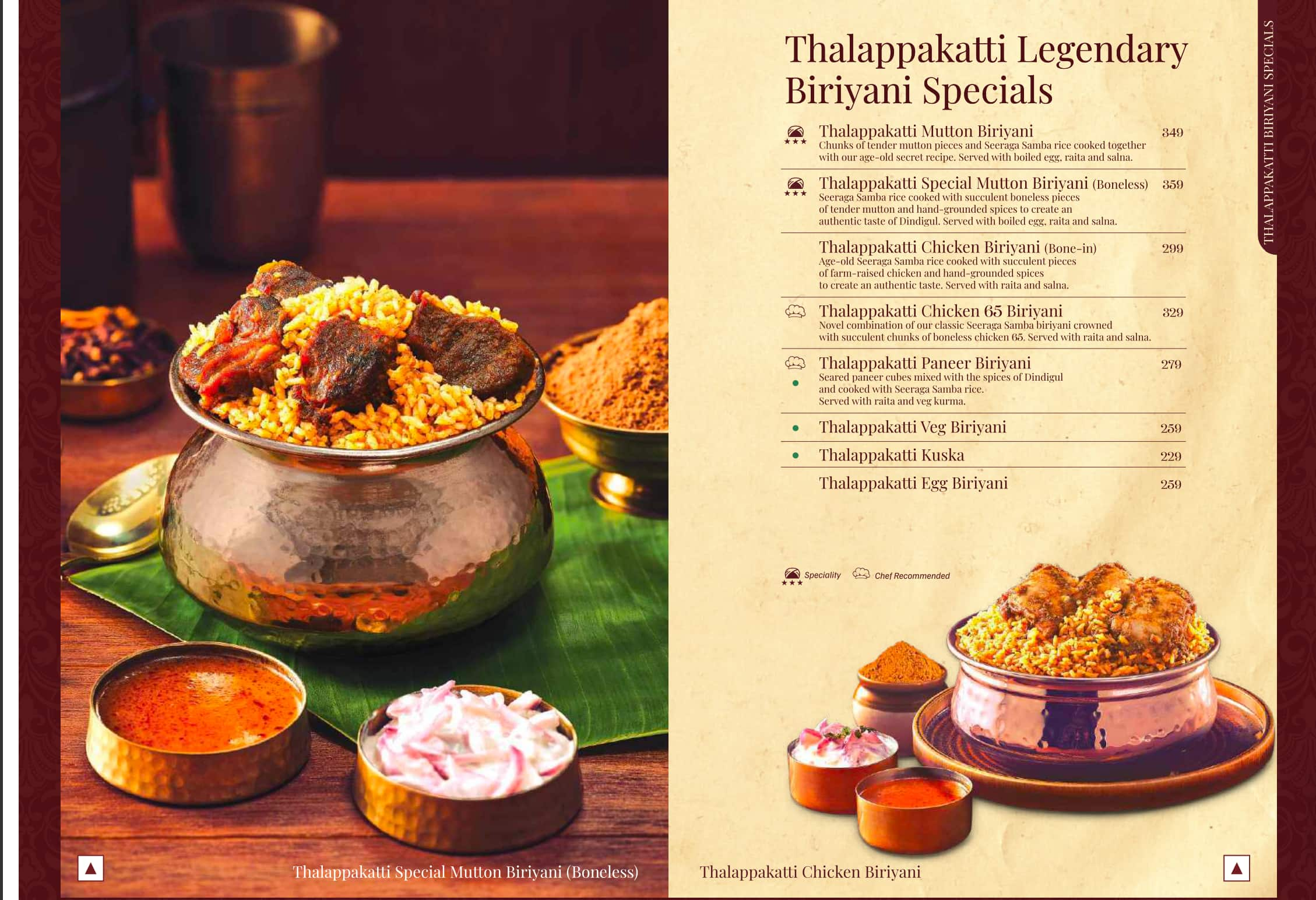
✍️ Dindigul Thalappakatti – Handwritten Fonts for a Traditional Touch

Menu of Dindigul Thalappakatti, Triplicane, Chennai

~ Uses handwritten-style fonts that evoke authenticity and warmth.

~ reates a connection with traditional South Indian heritage and homemade flavors.

Best for: Family-friendly South Indian restaurants and regional eateries.

🌿 The Roots Above – Classic Serif for an Elegant Appeal

Menu of Roots Above, Chandpole, Udaipur Menu of Roots Above, Chandpole, Udaipur

~ Uses refined serif fonts to evoke sophistication and authenticity.

~ Enhances the brand’s identity as a premium, nature-inspired dining destination.

Best for: Fine-dining restaurants, eco-luxury resorts, and heritage-themed eateries.

🔤 Chaayos – Modern, Playful Typography for a Casual Vibe

Best Chai cafe in One India Bulls, Mumbai - Get relaxed at chaayos One India Bulls, Mumbai – Chaayos, menu design ideas

~ Uses bold, sans-serif fonts with a contemporary layout.

~ Enhances a relaxed and youthful appeal, perfect for the café-going crowd.

Best for: Modern chai cafés and casual hangout spots.

Lesson: The font choice should reflect the essence of your brand.

1. Classic serif fonts work best for heritage-rich restaurants that emphasize tradition.

2. Handwritten fonts create a personal, homely feel, ideal for regional and family-friendly eateries.

3. Modern, bold typography enhances casual and trendy cafés, making them visually appealing to younger audiences.

A well-chosen font does more than just display a menu, it tells a story about the restaurant’s identity, making customers feel connected to the brand even before they take their first bite.

A well-designed menu is just one piece of the puzzle in running a successful restaurant. But managing orders, tracking inventory, and ensuring seamless operations require more than just great design. This is where a restaurant management software comes in. With an advanced BillBerry POS system, restaurants can streamline billing, monitor sales trends, and even analyze which menu items perform best, all in real-time.

4. Theme-Based Menu Design for Different Indian Restaurants

A restaurant’s menu isn’t just a list of dishes, it’s an extension of its brand and atmosphere. Many Indian restaurants design their menus around a central theme, reinforcing their identity and making the dining experience more immersive. Whether it’s a rustic dhaba, a community-driven eatery, or a modern brewery, themed menu designs help create a memorable impression.

Unique Themed Menus in India

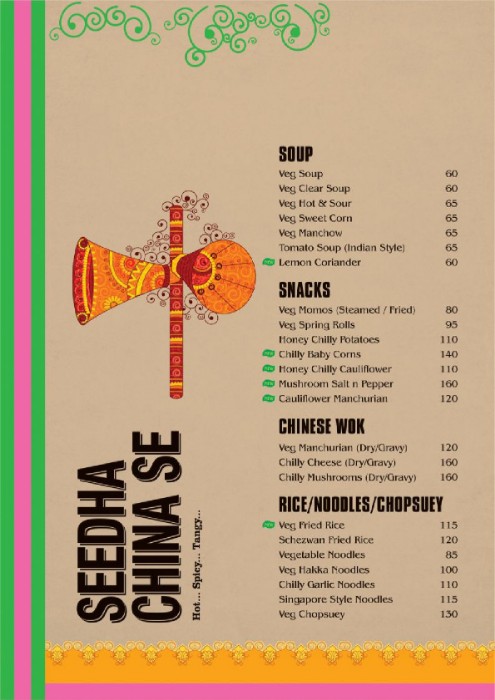
📜 Amrik Sukhdev – Handwritten, Chalkboard-Style Menu for a Dhaba Experience

AMRIK SUKHDEV, MURTHAL, NEW DELHI Reviews, Menu, Phone Number, Ratings - MouthShut.com    AMRIK SUKHDEV, GT ROAD, MURTHAL Reviews, Menu, Phone Number, Ratings - MouthShut.com - Reviews - 21 to 40 - mouthshut.com

~ Features a simple, handwritten chalkboard-style layout, reminiscent of highway dhabas.

~ Creates a rustic and homely appeal, reinforcing the comfort food experience.

Best for: Roadside dhabas, Punjabi eateries, and street food joints.

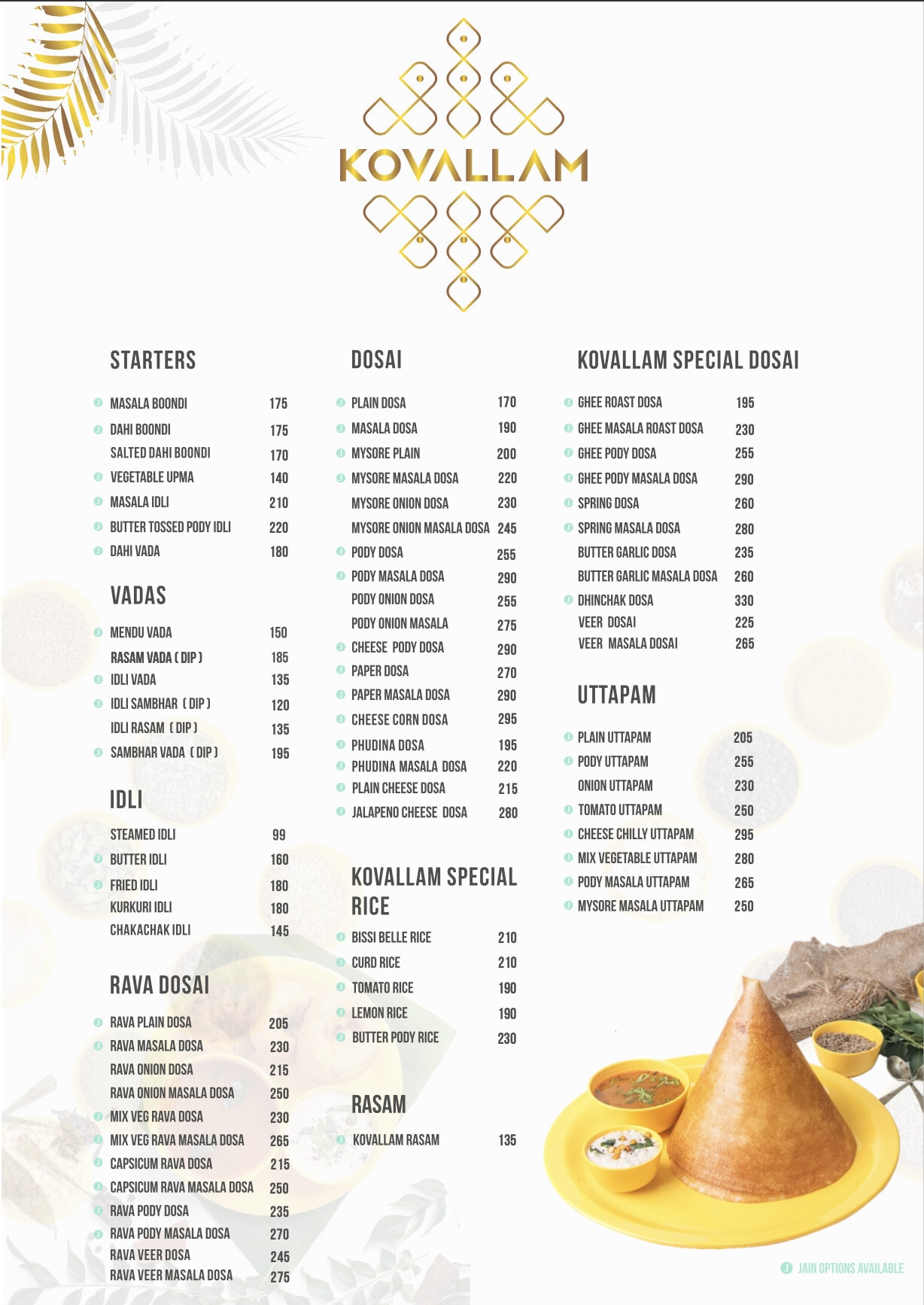
🌊 Kovallam – Coastal Elegance on a Plate

Kovallam Restaurant- The South Indian Kitchen in Opposite Hotel Hillock Between Vaishno Devi And, Ahmedabad,Gandhinagar-gujarat - Best Restaurants near me in Gandhinagar-gujarat - Justdial

~ Uses refined serif fonts to reflect tradition and sophistication.

~ Captures the essence of premium coastal dining with a serene touch.

Best for: Seafood fine-dining, beachside resorts, and heritage coastal eateries.

A menu isn’t just about listing dishes, it should transport diners into a cultural experience. Incorporate traditional motifs, hand-drawn illustrations, and heritage-inspired typography to make your menu feel like a piece of history rather than just a guide to food.

🎭 Toit – Story-Driven, Artistic Brewery Menu

Menu of Toit, Indiranagar, Bangalore

~ Integrates artistic illustrations and mythological references to match the brewery’s rustic interiors.

~ Uses bold, themed fonts and textured backgrounds for a grand visual appeal.

Best for: Themed bars, breweries, and fusion dining spaces.

Lesson: A well-thought-out theme-based menu enhances brand recall and customer engagement.

1. Dhabas & street food eateries use handwritten or chalkboard menus for a raw, authentic feel.

2. Traditional family restaurants opt for structured, community-style menus to highlight cultural dining experiences.

3. Modern bars & breweries incorporate artistic and storytelling elements to match their themed ambiance.

When the menu design ideas align with the restaurant’s identity, it doesn’t just inform customers, it immerses them in the dining experience, making it more memorable and enjoyable.

5. Smart Pricing & Layout Strategies in Indian Menus

Menu design isn’t just about aesthetics, it’s also a psychological tool that influences customer choices. Indian restaurants use strategic pricing and layout techniques to guide customers toward high-profit items, make dishes seem more affordable, and subtly encourage larger orders.

How Indian Restaurants Use Smart Pricing & Layout Techniques

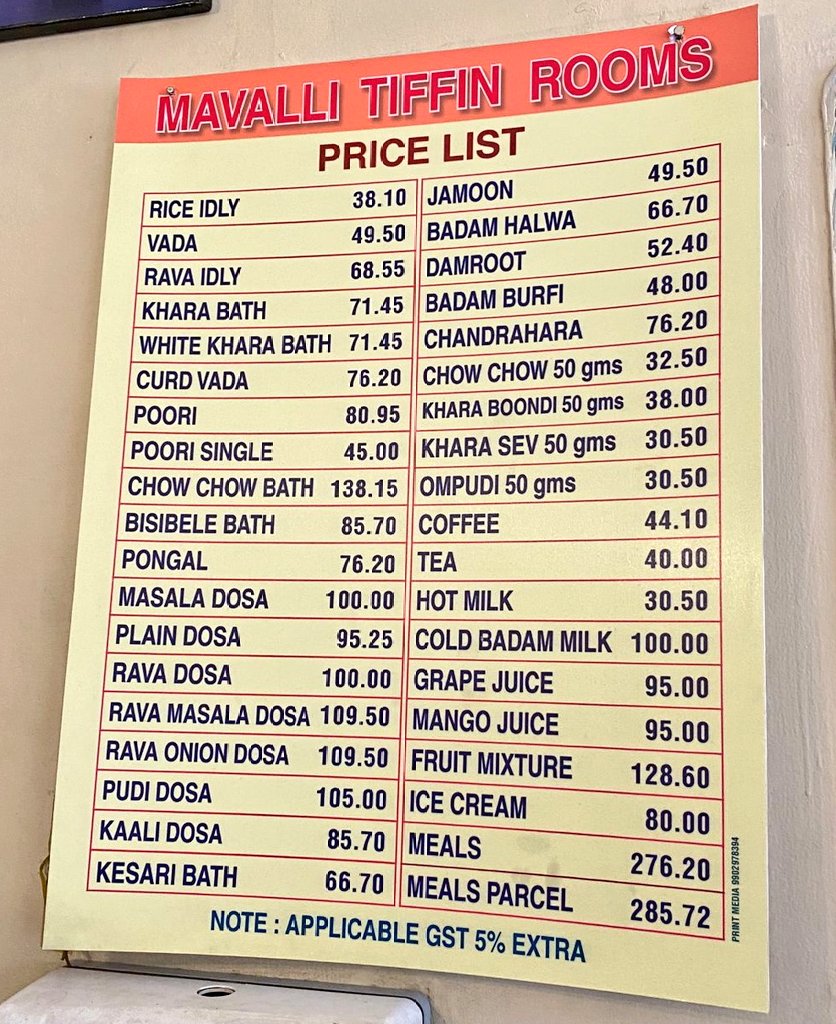
💰 MTR (Mavalli Tiffin Rooms) – Removing Currency Symbols to Reduce Price Sensitivity

Sophie Ross on X: "Breakfast of champions in #Bangalore - #masaladosa and #chandrahara at the iconic Mavalli Tiffin Rooms aka MTR Lalbagh Road, established in 1924, and now in #London too as

~ The menu omits the ₹ symbol, making customers focus on the food rather than the cost.

~ This strategy reduces price resistance, making diners more likely to order based on preference rather than budget.

Best for: Traditional restaurants and heritage eateries looking to create a premium dining experience.

📍 Haldiram’s – Strategic Placement of Profitable Dishes

Menu of Haldiram's restaurant, Kandivali East, Mumbai

~ High-margin items are placed in the top-right corner of the menu, the spot where customers’ eyes naturally focus first.

~ Bestseller and combo meals are highlighted to increase their appeal.

Best for: Fast food chains and casual dining restaurants aiming to maximize sales of signature dishes.

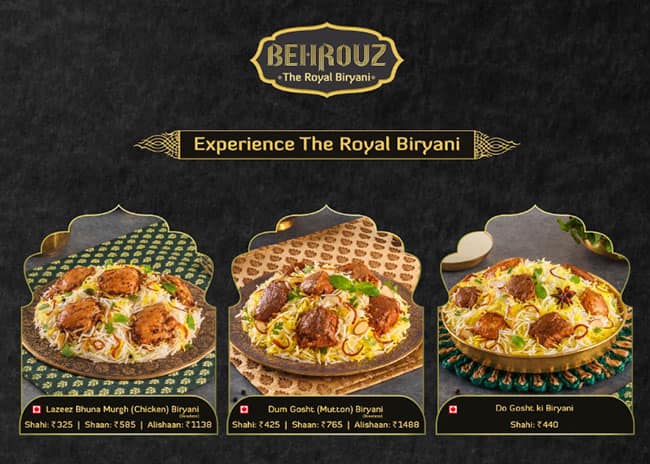
🃏 Behrouz Biryani – Decoy Pricing to Make Mid-Range Items More Attractive

Menu of Behrouz Biryani, Infocity, Gandhinagar, menu design ideas

A premium-priced royal biryani thali is listed to make regular biryanis appear more affordable in comparison.

This technique subtly nudges customers toward ordering mid-priced items, increasing overall revenue.

Best for: Biryani chains, QSRs, and restaurants with tiered pricing models.

Lesson: Smart menu pricing and layout strategies can subtly influence customer spending habits.

1. Removing currency symbols makes prices feel less intimidating.

2. Placing high-profit items strategically increases their visibility and likelihood of being ordered.

3. Decoy pricing makes mid-range dishes seem like better deals, driving sales without lowering profits.

By using these psychological tricks, restaurants ensure that their menus don’t just look good but also work as silent sales tools, encouraging customers to order more and enjoy a well-curated dining experience.

Why Menu Design Ideas Matter for Indian Restaurants

A menu is more than just a list of dishes, it’s a crucial branding tool that shapes customer perception, enhances the dining experience, and directly impacts a restaurant’s profitability. A thoughtfully designed menu not only attracts the right audience but also subtly guides customer choices, increasing sales and brand recall.

Top Indian restaurants invest in strategic menu design by focusing on:

Colour Psychology – Choosing colours that evoke the right emotions and influence appetite.
Layout & Format – Using menu structures that align with their brand identity and improve readability.
Typography – Selecting fonts that enhance the restaurant’s theme and ambiance.
Thematic Design – Creating immersive menu experiences that strengthen brand storytelling.
Pricing & Placement Strategies – Implementing smart pricing techniques to maximize profitability.

If you’re considering a menu revamp for your restaurant, drawing inspiration from successful brands can help you create a menu that not only looks appealing but also enhances customer engagement and boosts revenue. A well-crafted menu is a silent yet powerful marketing tool, make sure yours works in your favor!

——————————————————————————————————————————————

While a thoughtfully crafted menu enhances branding and customer experience, restaurant success depends on efficiency behind the scenes with great menu design ideas. Investing in a smart restaurant management system helps optimize operations, reduce errors, and improve customer service. From digital menus and automated inventory tracking to real-time order management, an advanced POS system ensures smooth and profitable restaurant operations. If you’re looking to enhance your restaurant’s workflow, explore how the right technology can simplify processes and boost your revenue with BillBerry POS! Contact BillBerry POS and Book Your Free Demo!

POS Software vs. Accounting Software: Key Differences & Best Choice for Your Business

In the fast-paced world of food businesses, technology plays a crucial role in streamlining operations and improving efficiency. However, many restaurant and food business owners often find themselves confused between accounting software and POS (Point of Sale) software. While both serve essential functions, they cater to different business needs. Let’s break down the key differences and help you decide which one is right for your business. Read more detailed arc

What is Accounting Software?

Accounting software is designed to manage financial transactions, recordkeeping, and financial reporting. It automates bookkeeping tasks and provides insights into a business’s financial health.

Key Features of Accounting Software:

~ Financial Reporting – Generates profit and loss statements, balance sheets, and cash flow reports.

~ Expense & Income Tracking – Monitors business expenses, revenue, and overall profitability.

~ Tax Calculation & Compliance – Helps with GST, VAT, and other tax calculations to ensure regulatory compliance.

~ Payroll Management – Assists in calculating employee salaries, deductions, and benefits.

~ Bank Reconciliation – Matches business transactions with bank statements to ensure accuracy.

~ Invoice Management Generates and tracks invoices for suppliers and vendors.


What is POS Software?

POS software is designed to handle sales transactions, inventory management, and customer interactions. It is primarily used at the point of sale in retail and restaurant businesses to facilitate smooth checkouts.

Key Features of POS Software:

~ Sales Processing – Manages orders, bills, and payment transactions.

~ Inventory Management – Tracks stock levels in real-time, reducing wastage and shortages.

~ Multi-Payment Options – Accepts cash, credit/debit cards, UPI, and digital wallets.

~ Customer Relationship Management (CRM) – Stores customer data for personalized promotions and loyalty programs.

~ Kitchen Display System (KDS) – Sends orders directly to the kitchen for faster service.

~ Real-Time Analytics – Provides sales reports and business insights.

~ Basic Financial Management – Tracks expenses, applies GST to orders, generates basic tax reports, manages vendor purchases, creates invoices for suppliers, records bank deposits, and allows cloud-based entry storage.

~ QR Code Ordering – Enables customers to scan a QR code to view the menu, place orders, and make payments directly from their phones.

~Franchise Management System – Helps multi-location businesses streamline operations, track sales, and maintain brand consistency across all outlets.

~ Captain App – Assists restaurant staff in taking orders efficiently and syncing them with the kitchen in real-time.

~ Personal Website/Mobile App Integration – Allows businesses to integrate their POS with a personal website or mobile app for online ordering and reservations.

~ Delivery Apps Integration – Seamlessly connects with food delivery platforms like Swiggy, Zomato, and Uber Eats to manage online orders.

For a complete solution, integrating both accounting software and POS software can provide seamless business operations.

Also Read: Affordable POS Softwares for Small Bakeries in India

Lessons from McDonald’s & Domino’s: What Makes Their Billing Systems So Efficient?

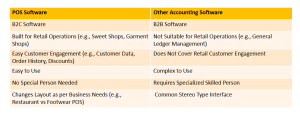
POS Software Vs. Accounting Software


FAQ: Common Questions About POS & Accounting Software

1. Can POS software replace accounting software?

Yes, modern POS software includes many financial management features like expense tracking, GST application, vendor invoice generation, and basic tax reporting. If these features meet your business’s financial needs, a dedicated accounting software may not be required.

2. Which software is best for restaurants?

For restaurant operations, POS software is crucial for handling orders, billing, and inventory. However, for tax filing and financial tracking, an accounting tool may still be needed unless the POS has integrated financial features.

3. Do I need both POS and accounting software for my business?

If your business has complex financial needs, using both is beneficial. However, if your financial requirements are basic, a POS system with financial features may be enough.

4. How does a POS system help with inventory management?

POS software tracks inventory in real-time, alerts you about stock shortages, and helps reduce waste, making it ideal for retail and food businesses.

Also Read: Why a POS System is More Than a Cash Register


Conclusion

Accounting software and POS software serve different purposes, but together, they can help businesses thrive. If you’re running a restaurant or food outlet, a robust POS system like BillBerry can streamline your daily operations, while an accounting tool ensures your financials are in order. Looking for an all-in-one solution?

Explore Billberry POS Software and take your business to the next level!

Book your FREE DEMO with BillBerry POS!

The Power of Data: Leveraging Analytics in Restaurant Management

In today’s competitive restaurant industry, success hinges on more than just serving delicious food and providing excellent customer service.

Restaurant owners and managers must make informed decisions based on data to drive profitability and stay ahead of the competition.

That’s where the power of data and analytics comes into play.

Customer data helps restauranteurs make informed decisions to drive profitability and stay ahead of the competition

In this blog post, we will explore how leveraging analytics in restaurant management can transform your business, improve operational efficiency, enhance customer experience, and ultimately boost your bottom line.

Restaurant Management System With Customer Relationship Management – Free Demo

Unlocking Insights

With the help of an advanced restaurant management system that provides analytical insights, restaurant owners can collect and analyze vast amounts of data.

From sales figures and inventory levels to customer preferences and feedback, this wealth of information holds valuable insights that can guide strategic decision-making.

By mining and interpreting this data, you can identify trends, patterns, and opportunities that would otherwise go unnoticed.

Restaurant Management System With Customer Relationship Management – Free Demo

Optimizing Menu Engineering

Menu engineering is a crucial aspect of restaurant management. By analyzing sales data and customer preferences, you can identify the most popular items and optimize your menu accordingly.

Data-driven insights allow you to determine which dishes are profitable, which need improvement, and which can be removed altogether.

Furthermore, you can experiment with pricing strategies and menu layouts to maximize revenue and guest satisfaction.

Restaurant Management System With Customer Relationship Management – Free Demo

Streamlining Operations

Analyzing operational data can help you identify bottlenecks and inefficiencies in your restaurant’s workflow.

By examining data related to table turnover times, order processing, and employee performance, you can streamline operations and enhance productivity.

For example, if you notice that certain dishes consistently take longer to prepare, you can adjust your kitchen processes to improve speed and reduce wait times.

Restaurant Management System With Customer Relationship Management – Free Demo

Personalizing the Customer Experience

Data analytics enables you to gain a deeper understanding of your customers. By analyzing data from loyalty programs, reservation systems, and customer feedback, you can identify individual preferences, dining habits, and even allergies or dietary restrictions.

Armed with this knowledge, you can offer personalized recommendations, promotions, and tailored experiences, fostering customer loyalty and satisfaction.

Restaurant Management System With Customer Relationship Management – Free Demo

Forecasting and Inventory Management

Accurate demand forecasting is essential for effective inventory management in restaurants.

By analyzing historical sales data, seasonal trends, and external factors such as holidays or local events, you can optimize your supply chain and reduce waste.

Data-driven inventory management allows you to maintain optimal stock levels, prevent overstocking or stockouts, and minimize food spoilage and costs.

Restaurant Management System With Customer Relationship Management – Free Demo

Monitoring and Improving Financial Performance

Data analytics provides real-time visibility into your restaurant’s financial performance.

By analyzing key financial metrics such as revenue, food costs, labor expenses, and profit margins, you can identify areas of concern and take proactive measures to improve profitability.

Regularly tracking and comparing data can help you make data-backed decisions, set realistic goals, and monitor progress toward achieving them.

Restaurant Management System With Customer Relationship Management – Free Demo

Conclusion

In today’s data-driven world, leveraging analytics in restaurant management has become a game-changer for success.

By harnessing the power of data, restaurant owners and managers can gain valuable insights to optimize menu engineering, streamline operations, personalize customer experiences, improve inventory management, and monitor financial performance.

Embracing data analytics allows you to make informed decisions that drive growth, boost profitability, and create a competitive edge in the ever-evolving restaurant industry.

So, don’t underestimate the power of data as it can revolutionize your restaurant management practices and pave the way for long-term success.

Moreover, this article is curated by content experts at Billberry, the industry leading Restaurant Management System to Skyrocket your restaurant business! To know more about Billberry, book a Free Demo Today!

Restaurant Management System With Customer Relationship Management – Free Demo

How ONDC Can Revolutionize Restaurants in India

The rapidly evolving digital landscape has transformed the way businesses operate, and the restaurant industry is no exception.

In India, the introduction of the Open Network for Digital Commerce (ONDC) has the potential to revolutionize restaurants, providing them with unprecedented opportunities to enhance their online presence, streamline operations, and drive growth.

In this article, we will explore how ONDC can revolutionize restaurants in India, backed by research and industry insights.

Restaurant Management Platform – Free Demo

Enhancing Online Visibility

One of the key benefits of ONDC for restaurants in India is the ability to improve their online visibility.

By leveraging the ONDC framework, restaurants can seamlessly integrate with various digital platforms and marketplaces, making it easier for customers to discover and engage with their brand.

With ONDC framework, restaurants can seamlessly integrate with various digital platforms and marketplaces

This increased online visibility can significantly boost the reach and exposure of restaurants, attracting new customers and driving revenue growth.

Streamlining Order and Delivery Processes

ONDC simplifies the order and delivery processes for restaurants, providing a seamless experience for both customers and restaurant owners.

Through integration with online food delivery platforms, restaurants can efficiently manage incoming orders, track deliveries, and streamline their operations.

This streamlined process helps improve order accuracy, reduce delivery times, and enhance overall restaurant customer satisfaction.

Restaurant Management Platform – Free Demo

Empowering Local and Small-Scale Restaurants

ONDC levels the playing field for local and small-scale restaurants in India, empowering them to compete with larger chains and establish a strong online presence.

By leveraging the ONDC framework, smaller restaurants can showcase their unique offerings, connect with a broader customer base, and gain a competitive edge in the digital marketplace.

This democratization of the restaurant industry fosters entrepreneurship and encourages diversity in the market.

Data-Driven Insights and Analytics

ONDC provides restaurants with access to valuable data-driven insights and analytics.

By leveraging this data, restaurants can gain a deep understanding of customer preferences, purchasing behavior, and market trends.

Armed with these insights, restaurants can make informed business decisions, personalize their offerings, and tailor their marketing strategies to meet the specific needs and expectations of their target audience.

Restaurant Management Platform – Free Demo

Seamless Payment Solutions

The integration of ONDC enables restaurants to offer seamless and secure payment solutions to their customers.

The integration of ONDC enables restaurants to offer seamless and secure payment solutions to their customers

By leveraging digital payment platforms within the ONDC ecosystem, restaurants can simplify the payment process, reduce cash handling, and provide customers with a convenient and hassle-free payment experience.

This not only enhances customer satisfaction but also helps in streamlining financial operations for the restaurants.

Promoting Collaboration and Innovation

ONDC fosters collaboration and innovation within the restaurant industry in India.

The framework encourages partnerships between restaurants, technology providers, and other stakeholders, leading to the development of innovative solutions and services.

This collaborative environment promotes knowledge sharing, industry growth, and drives continuous improvement, ultimately benefitting the entire restaurant ecosystem.

Restaurant Management Platform – Free Demo

Conclusion

The introduction of ONDC in India presents a transformative opportunity for restaurants.

By leveraging the framework, restaurants can enhance their online visibility, streamline operations, gain valuable insights, and provide a superior customer experience.

ONDC empowers local and small-scale restaurants, promotes innovation, and levels the playing field in the competitive digital marketplace.

As more restaurants in India embrace ONDC, we can expect a significant revolution in the way the industry operates, ultimately driving growth and success for restaurants across the country.

Moreover, this article is curated by content experts at Billberry, the industry leading Restaurant Management Platform to Skyrocket your restaurant business! To know more about Billberry, book a Free Demo Today!

More like this:
How to Register Your Restaurant on Swiggy?
Top 18 Restaurant Franchise Businesses in India
Guide To Restaurant Table Setting

Restaurant Management Platform – Free Demo

How to Register Your Restaurant on Swiggy?

With the growing popularity of food delivery services, joining a platform like Swiggy can significantly boost your restaurant’s visibility and customer reach. Many people question that how to register on swiggy, so here’s the answer!

Swiggy is one of the leading food delivery platforms, connecting hungry customers with local eateries

Food delivery isn’t just a trend, it’s the future. With more people relying on platforms like Swiggy for their everyday meals, listing your restaurant online is no longer optional, it’s essential. Whether you’re a small local café or an expanding franchise, getting your restaurant on Swiggy can massively improve your reach, increase daily orders, and build long-term customer loyalty.

In this comprehensive guide, we’ll walk you through everything, from why you should join Swiggy to the detailed registration process, documents you’ll need, common pitfalls to avoid, and what to do after going live.

🍔 Why You Should List Your Restaurant on Swiggy

Before diving into the “how,” let’s quickly understand the “why.”

✅ Benefits of Joining Swiggy:

~ Massive Customer Base: Swiggy serves millions of active users across India.

~ Marketing Boost: Enjoy increased visibility through in-app promotions, banners & featured listings.

~ Order Automation: Focus on food prep while Swiggy handles logistics, payments, and delivery.

~ Data-Driven Insights: Get customer behavior insights to tweak your menu and pricing strategies.

~ Better Brand Recognition: Being on Swiggy builds credibility, especially for new outlets.

Whether you’re aiming to increase walk-ins, grow delivery revenue, or build brand loyalty, Swiggy helps you get there faster.

📝 What to Prepare Before You Start

Before you begin the registration process, gather all the necessary details and documents. Having these on hand will save time and speed up verification.

1. Basic Restaurant Details

– Name of your restaurant

– Complete address with pin code

– Contact number and email

– Cuisine types offered (e.g., North Indian, Chinese, Continental)

2. Menu

– A digital version of your menu (PDF, Excel, or direct entry)

– Description of each dish

– Prices (inclusive of taxes)

– Clear images of your best-selling items (optional but increases conversions)

3. Legal & Compliance Documents

~ FSSAI License: Mandatory for listing

~ GST Certificate: Or GST exemption document (if applicable)

~ Shop & Establishment Certificate or Trade License

~ PAN Card of the business

~ Canceled cheque or passbook copy for bank account verification

💡 Pro Tip: Restaurants with complete documentation and clear menus often go live faster.

Step-by-Step Guide to Register on Swiggy

🔹 Step 1: Visit the Swiggy Partner Portal

Head to https://partner.swiggy.com. This is Swiggy’s official platform for restaurant partners.

🔹 Step 2: Create a New Account

Click “Register” and provide:

– Your name

– Phone number

– Email address

– Restaurant name and location

– Once submitted, Swiggy’s team will send a verification link or OTP to begin the next steps.

🔹 Step 3: Fill Out Restaurant Information

This is where you provide:

– Restaurant name & physical address

– Cuisine types (you can select multiple)

– Days and hours of operation

– Dine-in options (if applicable)

Make sure to pin your exact location on the map, this is used for delivery radius setup.

🔹 Step 4: Upload Menu

Input your menu items with:

– Names

– Category (e.g., starters, mains, beverages)

– Descriptions (keep it short but enticing)

– Prices

– Dish images (recommended)

You can always update your menu later through the Swiggy dashboard.

🔹 Step 5: Submit Documents

Upload scanned copies or images of:

– FSSAI License (with expiry date clearly visible)

– GST Certificate

– PAN Card

– Bank details with passbook/cancelled cheque

– Business registration or trade license

Note: The system may take 24–72 hours to validate your documents.

🔹 Step 6: Bank Account Verification

Enter:

– Bank Name

– Account Number

– IFSC Code

– Account holder’s name

– Swiggy may perform a micro-deposit (e.g., ₹1) to verify the account.

🔹 Step 7: Review and Accept Swiggy’s Agreement

Carefully read the Swiggy Restaurant Partner Agreement, which includes:

– Commission percentages

– Payment cycles

– Packaging guidelines

– Service obligations

Once you accept the terms, the onboarding will proceed to training.

🔹 Step 8: Onboarding & Dashboard Training

A Swiggy representative may schedule a call or send a recorded training session.

This includes:

– How to manage incoming orders

– Menu and price changes

– Accepting and rejecting orders

– Refund and cancellation process

– Customer chat support

Once complete, your restaurant status is set to “Live”, and you’re ready to start receiving orders.

Common Mistakes to Avoid During Swiggy Registration

~ Incomplete documents: Missing or unclear documents delay approval.

~ Inaccurate bank details: Leads to payment issues.

~ Low-quality menu photos: Reduces chances of customers ordering.

~ Overpriced or underdescribed menu: Keep pricing competitive and descriptions mouth-watering.

📊 After Going Live – What’s Next?Now that you’re live, the real game begins.

Tips for Success on Swiggy:

~ Respond to Orders Quickly: Delays hurt ratings.

~ Maintain High Food Quality: Repeat orders depend on customer satisfaction.

~ Offer Combo Deals & Discounts: Helps you show up in “Trending” or “Best Offers.”

~ Monitor Customer Ratings: Swiggy gives priority to well-rated partners.

~ Keep Menu Fresh: Update items based on what sells and what doesn’t.

💬 Pro Tip: Use data from Swiggy’s dashboard to learn what’s working, and what isn’t.

🌟 Swiggy + Billberry = Ultimate Combo

While Swiggy helps you sell more, Billberry helps you manage better.

At Billberry, we’ve built a robust Restaurant Management System (RMS) that syncs your in-house and online operations. From managing stock, staff, multi-chain outlets, and basic accounts, Billberry does it all in one place.

Registering your restaurant on Swiggy can be a game-changer for your business

By following this comprehensive guide, you’ll be well-equipped to navigate the registration process smoothly.

Remember to provide accurate information, upload the necessary documents, and familiarize yourself with the Swiggy partner dashboard.

Once you go live, ensure prompt order management and maintain the quality of your food to maximize customer satisfaction.

Good luck and enjoy the benefits of being part of the Swiggy platform!

Moreover, this article is curated by content experts at Billberry, the industry leading Point of Sale to Skyrocket your restaurant business! To know more about Billberry, book a Free Demo Today!

You might also like:
The Journey Of Swiggy and Zomato Logo
Guide To Restaurant Table Setting
Top 18 Restaurant Franchise Businesses in India
101 New Ideas for Restaurant Name
Managing a Multi-Chain Restaurant: Tips and Strategies

Top 11 Restaurant Franchises in India for Aspiring Restaurateurs

In a country where food is emotion, fine dining isn’t just a luxury, it’s a lifestyle. With rising disposable incomes and a growing appetite for memorable experiences, India’s fine-dining space is blossoming. While cafes and fast food chains are booming, there’s a unique market for those who want to offer guests a luxurious ambience, curated menus, and white-glove service.

If you’re planning to invest in the world of food, these top 11 fine-dining restaurant franchises in India promise both prestige and profit.

A franchise model offers franchisor’s proven business model, training, marketing, and ongoing support in exchange for an initial fee and ongoing royalties.

1. Punjab Grill

Punjab Grill Nort Indian Cuisines | Palladium Ahmedabad

Punjab Grill

~ Owned by: Lite Bite Foods

~ Cuisine: Royal Punjabi & North Indian

~ Ambience: Sophisticated Mughal-inspired interiors with contemporary touches

~ Franchise Investment: ₹2 – ₹4 crores

~ Presence: Delhi NCR, Mumbai, Bengaluru, Chennai, and abroad

~ USP: From dal makhani to tandoori lamb chops, the menu delivers royal richness rooted in North Indian traditions

~ Why it works: A well-established name with strong recall among fine-dine lovers seeking authentic Punjabi cuisine.


2. Barbeque Nation

Barbeque Nation restaurant franchises in india

Barbeque Nation

~ Owned by: Barbeque Nation Hospitality Ltd.

~ Cuisine: Multi-cuisine grills + Indian buffet

~ Ambience: Lively open grills at every table, festive vibe

~ Franchise Investment: ₹3 – ₹5 crores

~ Presence: 85+ cities across India

~ USP: Interactive DIY grilling, unlimited buffet, and frequent food festivals

~ Why it works: One of India’s most successful fine dining buffet brands, consistent experience across locations.


3. Eat Punjab

eat punjab | restaurant franchises in india

Eat Punjab

~ Owned by: Culinate Hospitality

~ Cuisine: North Indian with Punjabi flair

~ Ambience: Modern Punjabi luxury with folk-inspired décor

~ Franchise Investment: ₹1.5 – ₹3 crores

~ Presence: Punjab, Delhi NCR, expanding into Tier 1 cities

~ USP: Rustic Punjabi flavors in a modern fine-dine format

~ Why it works: Combines emotional nostalgia of Punjab with premium restaurant aesthetics.


4. Mainland China

Mainland China

~ Owned by: Speciality Restaurants Ltd.

~ Cuisine: Authentic Chinese & Pan-Asian

~ Ambience: Zen-inspired interiors, warm lighting, and Oriental charm

~ Franchise Investment: ₹2 – ₹5 crores

~ Presence: Pan-India presence in metros and major Tier 1 cities

~ USP: Offers genuine Chinese flavours without Indian fusion, rare in India

~ Why it works: One of the first names that come to mind for luxury Chinese cuisine restaurant franchises in India.


5. The Great Kabab Factory

The Great Kabab Factory

The Great Kabab Factory

~ Owned by: K Hospitality Corp

~ Cuisine: Awadhi, Mughlai, and regional kababs

~ Ambience: Classy, understated with an open kitchen setup

~ Franchise Investment: ₹3 – ₹5 crores

~ Presence: Across India, Middle East & Southeast Asia

~ USP: Unlimited kabab experience with rotating menus and set meal format

~ Why it works: Signature fine dining experience designed for kabab lovers looking for variety and richness.


6. Moti Mahal Delux

Moti Mahal Delux Restaurants Franchises in india

Moti Mahal Delux

~ Founded by: Kundan Lal Gujral

~ Cuisine: Traditional Mughlai & North Indian

~ Ambience: Rich wooden interiors, warm tones, and a legacy charm

~ Franchise Investment: ₹1.5 – ₹3.5 crores

~ Presence: 100+ outlets across India and overseas

~ USP: The brand that gave India butter chicken | a timeless Mughlai heritage

~ Why it works: The legacy of being an inventor of iconic dishes makes it a magnet for both desi and global foodies.


7. Copper Chimney

Copper Chimney - Viviana Mall

Copper Chimney

~ Owned by: K Hospitality Corp

~ Cuisine: North Indian with Bombay-style interpretations

~ Ambience: Contemporary Indian décor with warm lighting

~ Franchise Investment: ₹2.5 – ₹4.5 crores

~ Presence: Mumbai, Delhi NCR, Chennai, Bengaluru, Pune

~ USP: Signature grills, slow-cooked dishes, and bold Indian spices

~ Why it works: Known for reinventing Indian classics for the modern diner.


8. Pind Balluchi

Pind Balluchi

~ Owned by:Lite Bite Foods

~ Cuisine:Traditional Punjabi with a modern twist

~ Ambience: Classic Punjabi village-inspired décor with plush seating

~ Franchise Investment: ₹1.5 – ₹3.5 crores

~ Presence: Delhi NCR, Mumbai, Bengaluru, Pune, and other metros

~ USP: Authentic Punjabi flavors with a premium dining experience

~ Why it works: A beloved name in the Punjabi fine dining segment with wide appeal and a festive atmosphere.


9. Kovallam

Kovallam | restaurant franchises in india

Kovallam

~ Owned by: Kovallam Group

~ Cuisine: South Indian coastal cuisine

~ Ambience: Subtle luxury with earthy elements and coastal décor

~ Franchise Investment: ₹1.5 – ₹2.5 crores

~ Presence: Bengaluru, Hyderabad, Kochi

~ USP: Premium South Indian seafood and Kerala-style meals in a fine-dine setting

~ Why it works: Fills a niche for fine South Indian dining, an underrepresented but fast-growing segment.


10. The Yellow Chilli

The Yellow Chilli | restaurant franchises in india

The Yellow Chilli

~ Owned by: Chef Sanjeev Kapoor

~ Cuisine: Global fusion with Indian flavors

~ Ambience: Elegant, modern decor with stylish dining spaces

~ Franchise Investment: ₹2.5 – ₹5 crores

~ Presence: Mumbai, Delhi NCR, Bengaluru, Ahmedabad, and other cities

~ USP: Innovative dishes with global inspirations, curated by India’s culinary legend

~ Why it works: Sanjeev Kapoor’s reputation and the blend of global fusion with Indian influences make this a prime choice for those wanting a mix of fine dining and creative cuisine.


11. Jassi De Parathe

Logo

Jassi De Parathe

~ Owned by: Jassi De Parathe

~ Cuisine: North Indian, Punjabi

~ Ambience: Traditional village-style décor with a contemporary twist

~ Franchise Investment: ₹1.5 – ₹3 crores

~ Presence: Delhi NCR, expanding to other major cities

~ USP: Authentic Punjabi food served in a family-friendly, yet premium atmosphere

~ Why it works: Brings the authentic, hearty flavors of Punjab to the fine dining space with a focus on parathas and regional dishes.


A restaurant franchise business is an excellent opportunity for entrepreneurs who want to start a business with a recognized brand name and an established business model.

The top 11 restaurant franchises in India provide excellent investment opportunities for individuals who are passionate about food and want to start a business in the restaurant industry.

Before investing, it is important to carefully review the terms and conditions of the franchise agreement, including the initial investment, ongoing royalties, and support provided by the franchisor.

India’s fine dining segment isn’t just surviving, it’s thriving. As consumers look for dining experiences over just meals, investing in a reputed restaurant franchises in india could be a smart and tasteful business move. Whether your heart lies in smoky tandoors or coastal spice trails, there’s a brand here that aligns with your culinary vision.

Moreover, this article is curated by content experts at Billberry, the industry leading Restaurant Management System to Skyrocket your restaurant business! To know more about Billberry, book a Free Demo Today!

Restaurant Franchise Management System – Free Demo