Tag: POS System

blog

UrbanPiper’s Bold U.S. Expansion: What It Means for the Food Tech Ecosystem

The food delivery and restaurant tech ecosystem is heating up, and one name making serious waves is UrbanPiper. Backed by food delivery giants like Zomato and Swiggy, UrbanPiper is now setting its sights on an ambitious 10x growth in the United States by 2027.

But what does this mean for the food tech world, and more importantly, for restaurant owners looking to streamline operations?

What is UrbanPiper?

UrbanPiper Enables Merchants to Go Live on ONDC Through Partners uEngage  and Bitsila

UrbanPiper is a restaurant management platform that acts as a middleware between food delivery aggregators and restaurants. It enables restaurants to manage online orders, menus, and integrations across multiple platforms, all from a single dashboard.

Already trusted by over 35,000 restaurants in India, UrbanPiper is now pushing boundaries globally. The U.S. market, known for its mature food delivery scene, presents both challenges and massive opportunities.

Why UrbanPiper’s U.S. Expansion Matters?

UrbanPiper entering the U.S. market isn’t just another international tech story, it’s a signal of evolving restaurant operations worldwide. The shift toward unified technology stacks, automation, and multi-platform integrations is no longer optional. It’s essential.

With rising operational costs, labor shortages, and the demand for seamless online ordering experiences, restaurants in the U.S. are actively seeking tools to digitize and optimize. UrbanPiper’s middleware model fits in perfectly, helping businesses manage:

~ Multi-aggregator online orders

~ Inventory and menu syncing

~ Real-time order tracking

~ Outlet-wise analytics

In essence, the platform simplifies complexity, a necessity in today’s fast-paced food service world.

What Can Indian Food Tech Companies Learn?

UrbanPiper’s bold move is also a learning opportunity for Indian SaaS startups in the food domain. The U.S. market values:

~ Scalability

~ Simplicity in integration

~ Data-driven decision-making tools

~ Reliable customer support

~ By focusing on these pillars, Indian tech players can position themselves competitively in global markets.

How UrbanPiper Aligns with the Food Business Growth Mindset?

UrbanPiper’s story is more than just a growth tale, it’s a testament to how the right technology can fuel restaurant growth at scale. Whether you’re managing a single cloud kitchen or a 100+ outlet QSR chain, having centralized control and real-time visibility over your operations can be a game-changer.

At Billberry POS, we resonate with this mindset. Our platform, too, is built on simplifying processes, automating workflows, and enabling growth for food businesses, be it local or global.

Final Thoughts

UrbanPiper’s ambition to scale 10x in the U.S. by 2027 is inspiring, not just for tech enthusiasts, but for every restaurant owner who dreams of simplifying operations and scaling smartly. It’s clear: the future of food service lies in integrated platforms and smart automation.

If you’re a food business owner looking to stay ahead of the curve, now’s the time to invest in the right tools.

👉 Ready to take control of your operations?

Try Billberry’s POS, a people + process driven platform that simplifies daily operations, enables seamless multi-outlet management, and drives sustainable growth.

Book your FREE demo and discover how Billberry can transform your food business!

The Ultimate Guide to Restaurant Table Setting

When it comes to dining in a restaurant, the table setting can play a crucial role in enhancing the dining experience.

The way the table is set up can set the tone for the entire meal. A well-set table not only looks inviting but also adds to the overall ambiance of the restaurant.

A well-set table not only looks inviting but also adds to the overall ambiance of the restaurant

Why Table Setting Matters in Restaurants

Your table is your canvas. And in the hospitality world, presentation is everything.

~ Sets the tone: A refined table setup creates a sense of occasion, whether it’s a romantic dinner or a business lunch.

~ Builds brand perception: Minimalist, classic, quirky, rustic, your tableware and layout speak volumes about your identity.

~ Increases comfort: Guests should feel relaxed and at ease, not confused about where to place their napkin or wine glass.

~ Improves operational flow: A consistent, organized layout helps your staff serve more efficiently and avoids mix-ups.

So how do you get it right, every time? Let’s dive into each element of a perfect table setting.

1. Table Linen: Tablecloths vs. Placemats

This may contain: the table is set with place mats and plates
The base of any setting is the table covering, and your choice sets the vibe instantly.

~ Tablecloths: Ideal for formal settings, white or pastel shades exude cleanliness and class. Ensure they are clean, wrinkle-free, and perfectly sized.

~ Placemats: Better suited for casual or quick-dining formats. They’re easier to clean, require less maintenance, and add a pop of style.

✨ Pro tip: Choose materials that align with your restaurant’s theme, linen for elegance, woven mats for earthy or ethnic styles.

2. Flatware: Choose According to Your Menu

Flatware isn’t just functional, it tells a story. Are you serving five courses or quick bites?

~ Basic Setting: Dinner knife, fork, and spoon.

~ Expanded Setting: Add a salad fork, soup spoon, fish knife, or dessert spoon based on the meal structure.

~ Placement Rule: Forks go to the left, knives and spoons to the right. Utensils should be used from the outside in.

Ensure all flatware is polished and consistent across tables. It’s these small details that elevate your guests’ experience.

3. Glassware: One Size Doesn’t Fit All

This may contain: three different types of drinks on a tray

Your glassware should match your menu offerings. A proper setup typically includes:

~ Water glass: Always present, placed above the knife.

~ Wine glasses: Red and/or white, depending on your offerings.

~ Champagne flutes: Optional but classy, especially for upscale or brunch venues.

Shape and size matter, wine glasses should allow aromas to develop, while water glasses should be sturdy and spill-resistant.

4. Plates: Designed for the Dish

Not all plates are created equal, and neither are your dishes.This may contain: plates and trays with leaves on them

~ Dinner Plate: Centerpiece of the setting.

~ Appetizer/Salad Plate: Placed on top of the dinner plate or separately if pre-set.

~ Cuisine-Specific Plates: Pasta bowls for Italian, compartment plates for thalis, steak plates for grill-focused menus.

✨ Tip for aesthetics: Use neutral plate colors to make food pop visually.

5. Napkins: Style Meets Function

This may contain: a table set with plates, silverware and wine glasses on top of a red cloth

Napkins serve both form and function. They should be:

~ Cloth for formal dining, folded elegantly or placed in a ring.

~ Paper for casual setups, neat, disposable, and well-placed.

Placement options:

~ On the dinner plate (folded flat or creatively).

~ To the left of the forks.

~ Inside the water glass (for decorative flair).

6. Centerpieces: The Table’s Personality

Story pin image

A well-chosen centerpiece brings warmth and beauty but shouldn’t interfere with visibility or space.

~ Options: Fresh flowers, low-profile candles, succulents, seasonal décor.

~ Rule: Keep it below eye level and easy to remove or adjust.

~ Avoid strong scents that may clash with food aromas.

7. Condiments: Salt, Pepper & More

This may contain: a table topped with bowls filled with food next to salt and pepper shakers on top of a white table cloth

Salt and pepper are non-negotiables, they belong on every table unless your menu is fixed and tasting-style.

~ Small Tables: One set at the center.

~Large Tables: Multiple sets for easy access.

Consider adding olive oil, chili flakes, or custom spice mixes if they complement your cuisine.

8. Table Numbers: Efficiency with Elegance

This may contain: there is a table number and wine glass on the table

Numbering your tables helps streamline service and prevents confusion.

~ Use elegant holders or stands.

~ Keep them visible but unobtrusive.

✨ Pro tip: Coordinate your table number designs with your restaurant’s theme, rustic wood, gold frames, acrylic stands — to stay on brand.

9. Table Setting Etiquette: The Subtle Details

This may contain: how to set a table for formal setting with the text overlay that says how to set a table

Consistency in placement is the secret to a polished table setting. Here’s a quick reference:

~ Forks to the left, knife blades toward the plate, spoons to the right.

~ Water glass above the knife; wine glass slightly to its right.

~ Bread plate above the forks, with the butter knife resting across it.

~ Napkin goes on the plate or to the left of the forks.

~ Servers should always serve from the left and clear from the right.

Also, teach your staff subtle service etiquette, such as replacing utensils between courses and discreet napkin-folding for returning guests.

Conclusion

In conclusion, a well-set restaurant table can elevate the dining experience for your customers.

By following the guidelines we have outlined above, you can create a beautiful and inviting table setting that will impress your guests and make them feel welcome.

Moreover, this article is curated by content experts at Billberry, the industry leading Restaurant Management System to Skyrocket your restaurant business! To know more about Billberry, book a Free Demo Today!

More like this:
Top 18 Restaurant Franchise Businesses in India
10 Food Photography Tips & Tricks for Restaurants
101 New Ideas for Restaurant Name

Restaurant Management System – Free Demo

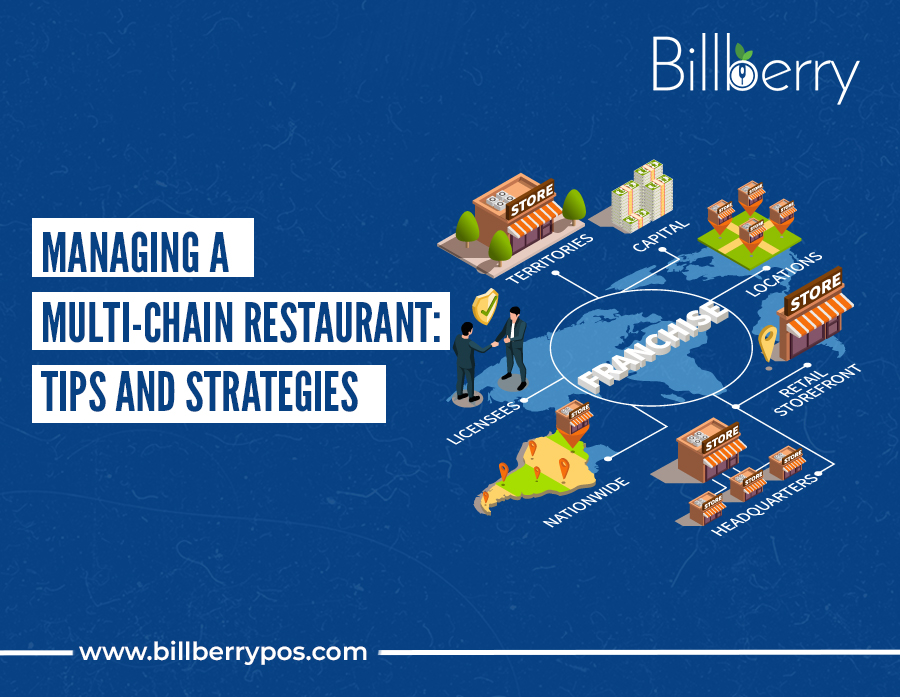
Managing a Multi-Chain Restaurant: Tips and Strategies

Running a single restaurant can be a challenging task, but managing a multi-chain restaurant can be even more difficult. With each location having its unique set of customers, staff, and operational needs, managing a Multi-Chain Restaurant Management System can seem overwhelming at times. However, with the right strategies and tools in place, managing a multi-chain restaurant can be a successful and profitable endeavor.

Here are some tips and strategies for managing a multi-chain restaurant:

Develop a Strong Brand Identity

One of the most critical aspects of managing a multi-chain restaurant is to create a strong brand identity that resonates with customers across all locations.

A strong brand identity not only helps attract customers but also helps build trust and loyalty.

A strong brand identity not only helps attract customers but also helps build trust and loyalty.

To develop a strong brand identity, consider the following:

Consistent branding

Ensure that all locations have consistent branding, including logos, colors, and design elements.

This consistency helps customers identify the brand and builds brand recognition.

Multi-Chain Restaurant Management System – Free Demo

Unique positioning

Differentiate your brand from competitors by identifying your unique selling proposition.

Develop a brand positioning statement that captures your brand’s essence and communicates its unique value proposition.

Customer-centric approach

Create a customer-centric brand by understanding the needs and preferences of your target customers.

Develop menus, promotions, and marketing campaigns that cater to their interests and tastes.

Centralize Operations

To manage a multi-chain restaurant effectively, it’s crucial to centralize operations.

By centralizing operations, you can streamline processes, reduce costs, and ensure consistency across all locations.

Here are some ways to centralize operations:

Use a central kitchen

Utilize a central kitchen to prepare food items that can be distributed to all locations.

This approach can help maintain consistency in food quality and reduce food wastage.

Multi-Chain Restaurant Management System – Free Demo

Implement a standardized menu

Develop a standardized menu across all locations to ensure consistency in food offerings and pricing.

This approach can also help reduce food costs by ordering ingredients in bulk.

Use a centralized POS system

Implement a centralized POS system that can be accessed by all locations.

Managing everything right from a single dashboard makes managing the entire business operations at your restaurant chain business a breeze.

The right Multi-chain restaurant management let’s you manage your entire business operations on a single dashboard.

The right POS system for restaurant chains like Billberry can offer end-to-end process management, real time transaction tracking and reports, royalty cycle management, multi pricing, online-food delivering, and more along with centralized operations.

This approach can help streamline all your business operations so that you as a food industry entrepreneur, can put your energy towards growth strategies rather than spending too much time on managing everything.

Foster a Culture of Communication and Collaboration

To manage a multi-chain restaurant successfully, it’s essential to foster a culture of communication and collaboration.

Encourage open communication and collaboration between staff members and locations.

This approach can help address operational issues quickly and efficiently. Multi-Chain Restaurant Management System.

Here are some ways to foster a culture of communication and collaboration:

Regular staff meetings

Conduct regular staff meetings across all locations to discuss operational issues, share best practices, and provide updates.

Use collaboration tools

Utilize collaboration tools such as messaging apps and project management software to facilitate communication and collaboration between staff members and locations.

Encourage feedback

Encourage feedback from staff members and customers to identify areas for improvement and implement changes.

Leverage Technology

Technology can play a significant role in managing a multi-chain restaurant.

By leveraging technology, you can automate processes, reduce costs, and improve efficiency. Here are some ways to leverage technology:

Use cloud-based solutions

Utilize cloud-based solutions for data storage, POS systems, and other operational needs.

Cloud-based solutions can help reduce IT costs and improve accessibility across all locations.

Multi-Chain Restaurant Management System – Free Demo

Implement mobile ordering

Implement mobile ordering and payment solutions to offer customers a convenient way to place orders and pay for their meals.

Use data analytics

Utilize data analytics to gain insights into customer behavior, sales trends, and operational performance.

This information can help identify areas for improvement and inform strategic decisions.

Conclusion

In conclusion, managing a multi-chain restaurant can be challenging, but with the right strategies and tools, it can be a successful and profitable endeavor.

Develop a strong brand identity, centralize operations, foster a culture of communication and collaboration, and leverage technology to improve efficiency and reduce costs.

By implementing these tips and strategies, you can create a consistent and high-quality customer experience across all locations, which can help build brand loyalty and drive revenue growth.

Moreover, this article is curated by content experts at Billberry. It is the industry leading franchise management solution for restaurant business and food industry. It is a complete ERP solution fabricated according to restauranteur’s needs.

More like this:
a. How A Franchise Management System Can Aid to A Food Franchise Business?
b. 10 Easy Steps To Grow Franchise Restaurant Business
c. How to Align Operations in Food Business to Become a Food Franchise

Multi-Chain Restaurant Management System – Free Demo

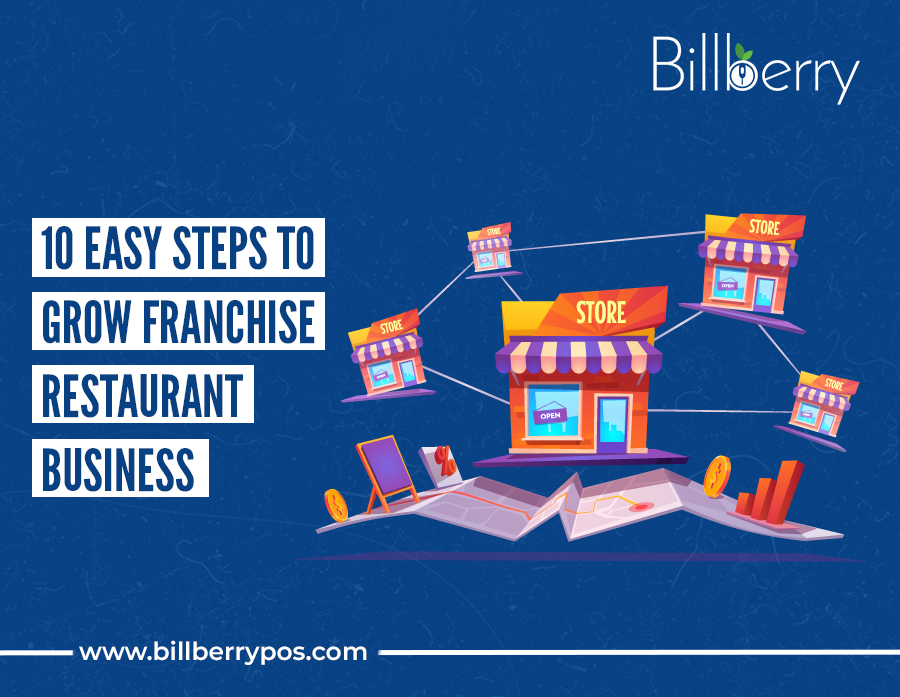
10 Easy Steps To Grow Franchise Restaurant Business

Franchising a restaurant business can be a great way to expand your brand and increase your profits.

However, the process of franchising a restaurant can be complicated and time-consuming.

In this article, we will outline the 10 definitive steps for franchising a restaurant business.

Franchise Restaurant Management System – Free Demo

Evaluate Your Restaurant’s Readiness

The first step in franchising your restaurant business is to evaluate your restaurant’s readiness.

You need to ensure that your restaurant is profitable, has a unique concept, and has a strong brand image.

Before franchising, you need to ensure that your restaurant is profitable, has a unique concept, and has a strong brand image.

You also need to have a proven business model that can be replicated in other locations.

Develop a Franchise Business Plan

Once you have evaluated your restaurant’s readiness, you need to develop a franchise business plan.

This plan should include the legal structure of your franchise, the fees and royalties that you will charge franchisees, the marketing strategy for your franchise, and the support and training that you will provide to franchisees.

Protect Your Intellectual Property

Before you start franchising your restaurant business, you need to protect your intellectual property.

This includes trademarking your restaurant’s name, logo, and other brand elements.

You also need to protect your recipes, processes, and other trade secrets.

The Franchise Disclosure Document (FDD) is a legal document that outlines all the information that a prospective franchisee needs to know before investing in your franchise.

This document includes information about the franchisor, the franchise system, the fees and royalties, the training and support provided to franchisees, and the terms and conditions of the franchise agreement.

Franchise Restaurant Management System – Free Demo

Register Your Franchise in Applicable States

Depending on the state in which you plan to franchise your restaurant business, you may need to register your franchise with that state’s regulatory agency.

This process can be complicated and time-consuming, so it is important to work with an experienced franchise attorney.

Recruit Franchisees

Once you have completed all the legal and regulatory requirements, you can start recruiting franchisees.

You should look for individuals who have experience in the restaurant industry, are passionate about your brand, and have the financial resources to invest in your franchise.

Provide Franchisees with Training and Support

To ensure the success of your franchisees, you need to provide them with comprehensive training and ongoing support.

To ensure the success of your franchisees, you need to provide them with comprehensive training and ongoing support.

This includes training on your restaurant’s operations, marketing, and customer service, as well as ongoing support through regular check-ins and assistance with problem-solving.

Monitor and Enforce Franchise Agreements

As a franchisor, it is your responsibility to monitor and enforce the franchise agreements with your franchisees.

This includes ensuring that franchisees are following your brand standards, paying the required fees and royalties, and operating their businesses in accordance with your system standards.

Franchise Restaurant Management System – Free Demo

Manage Brand Reputation

As your franchise grows, it is important to manage your brand’s reputation.

This includes monitoring online reviews, responding to customer complaints, and ensuring that your franchisees are maintaining the quality and consistency of your brand.

Continuously Improve Your Franchise System

Finally, it is important to continuously improve your franchise system.

This includes gathering feedback from franchisees, analyzing financial and operational data, and implementing changes to improve the overall performance of your franchise.

Final Words

By evaluating your readiness, developing a franchise business plan, protecting your intellectual property, and providing comprehensive training and ongoing support to franchisees, you can build a strong foundation for your franchise system.

It is also important to work with experienced franchise attorneys and follow all legal and regulatory requirements when registering your franchise in applicable states.

Also keep in mind that the franchisees are paying the required fees and royalties. You can also manage royalty cycles with a restaurant management system.

Moreover, as your franchise grows, it is important to manage your brand’s reputation by monitoring online reviews, responding to customer complaints, and ensuring that your franchisees are maintaining the quality and consistency of your brand.

Finally, it is important to continuously improve your franchise system by gathering feedback from franchisees, analyzing financial and operational data, and implementing changes to improve the overall performance of your franchise.

In conclusion, franchising a restaurant business can be a challenging but rewarding process.

By following these 10 definitive steps, you can build a strong and successful franchise system that will help you expand your brand and increase your profits.

Moreover, this article is curated by content experts at Billberry. It is a complete ERP solution for Restaurant Franchise Businesses. Book a free demo today to learn how you can manage everything right from procurement to customer engagement on a single dashboard with Billberry.

Franchise Restaurant Management System – Free Demo

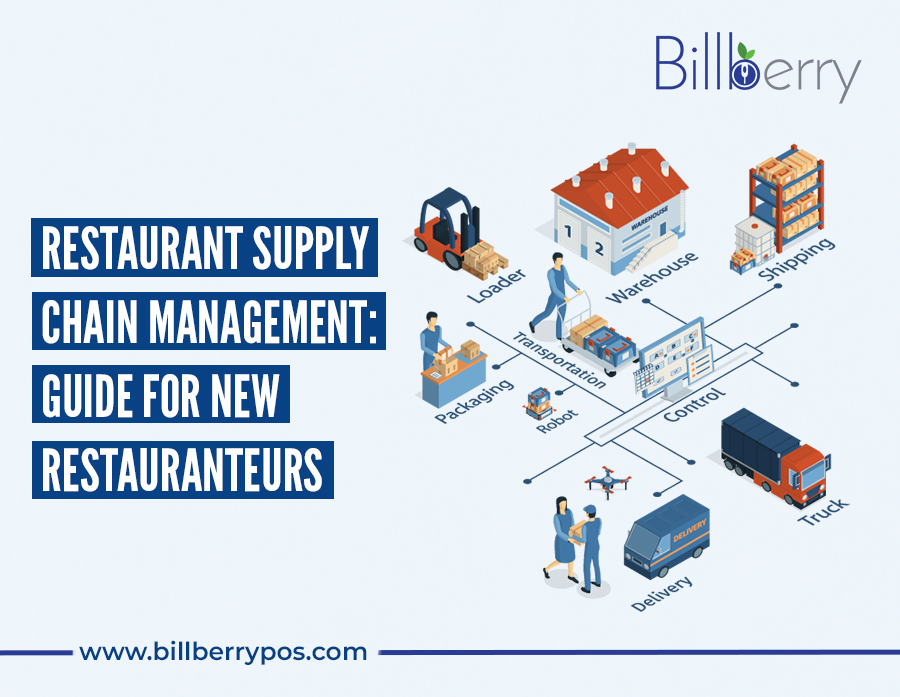
Restaurant Supply Chain Management: New Restauranteur’s Guide

The restaurant industry has grown tremendously over the years, with new players entering the market every day.

The global food service market is projected to reach a value of $4.2 trillion by 2027, growing at a CAGR of 4.8% from 2020 to 2027, according to a report by Allied Market Research.

The global food service market is projected to reach a value of $4.2 trillion by 2027, growing at a CAGR of 4.8% from 2020 to 2027 – Allied Market Research


However, running a successful restaurant involves more than just cooking great food and providing excellent customer service. One of the critical aspects of restaurant management is supply chain management.

Restaurant Management System – Free Demo

The supply chain refers to the network of suppliers, manufacturers, distributors, and retailers involved in the production and delivery of goods to consumers.

Restaurant supply chain management, therefore, refers to the process of overseeing the entire supply chain of a restaurant, from the procurement of raw materials to the delivery of finished products to customers.

For new restaurateurs, understanding how to manage their restaurant supply chain can be a daunting task.

In this article, we will provide a comprehensive guide to restaurant supply chain management, including the benefits, challenges, and best practices to follow.

6 Tips To Keep Restaurant Food Cost Under Control

Benefits of Restaurant Supply Chain Management

Effective restaurant supply chain management offers numerous benefits to the business.

A study by the National Restaurant Association found that restaurants that effectively manage their supply chains have a 24% higher profit margin than those that don’t.

Restaurants that effectively manage their supply chains have a 24% higher profit margin than those that don’t – National Restaurant Association

Some of the key benefits include:

Cost Reduction

By optimizing the supply chain, restaurants can minimize costs and increase profitability.

This can be achieved by streamlining procurement, reducing waste, and minimizing overhead costs.

All of this can also be achieved with the help of an efficient restaurant management system.

Improved Efficiency

A well-managed supply chain ensures that the restaurant gets the right products at the right time, in the right quantity, and at the right price.

This helps to reduce inventory costs, improve production efficiency, and ensure customer satisfaction.

How To Use Restaurant Interior Colours To Increase Sales?

Quality Control

Supply chain management helps to ensure that the restaurant sources high-quality products from reliable suppliers.

This helps to improve the quality of food served, reduce the risk of contamination, and protect the restaurant’s reputation.

Restaurant Billing Software – Free Demo

Challenges of Restaurant Supply Chain Management

Despite the numerous benefits of restaurant supply chain management, there are also several challenges that restaurateurs must be aware of. Some of the common challenges include:

Quality Control

Ensuring the quality of products sourced from suppliers can be a challenge.

This is because different suppliers may have varying standards of quality, which can affect the quality of the final product.

Price Fluctuation

The cost of raw materials can be unpredictable, with prices fluctuating due to various factors such as seasonality, supply and demand, and weather conditions.

Logistics

Managing the logistics of the supply chain can be complex, with multiple suppliers, distributors, and retailers involved.

This can lead to delays, stock-outs, and increased transportation costs.

Restaurant POS Software – Free Demo

Best Practices for Restaurant Supply Chain Management

To overcome the challenges of restaurant supply chain management and maximize the benefits, restaurateurs should follow these best practices:

Build Strong Relationships with Suppliers

Developing strong relationships with suppliers is crucial for ensuring quality products, competitive pricing, and reliable delivery.

This can be achieved by regularly communicating with suppliers, negotiating prices, and paying on time.

7 Essential Restaurant Menu Design Tips – Restaurant Menu Engineering

Monitor Inventory Levels

Monitoring inventory levels is essential for ensuring that the restaurant has enough stock to meet demand without incurring excess inventory costs.

This can be achieved by implementing inventory management software or using manual inventory tracking methods.

Implement Quality Control Measures

Implementing quality control measures such as food safety protocols and quality checks at each stage of the supply chain can help to ensure that the restaurant serves high-quality food and maintains its reputation.

Use Restaurant ERP Solution

Using a restaurant ERP solution offers end to end restaurant operations management with analytical reports.

Everything can be managed on a single centralized dashboard with the help of a robust restaurant ERP solution.

It can also help to optimize the supply chain by identifying areas of improvement, predicting demand, and reducing waste.

How To Create A Restaurant Management Checklist

Consider Sustainable Practices

Adopting sustainable practices such as sourcing locally, reducing waste, and using eco-friendly packaging can help to reduce costs, improve brand image, and contribute to environmental conservation.

Conclusion

In conclusion, effective restaurant supply chain management is critical for the success of any restaurant.

By understanding the benefits, challenges, and best practices of supply chain management, new restaurateurs can optimize their supply chain, reduce costs, improve efficiency, and maintain customer satisfaction.

Moreover, this article is curated by content experts at Billberry, the all-in-one ERP solution for food businesses. Have deeper business insights with 40+ reports to manage everything right from procurement to customer engagement on a single dashboard. Book a Free Demo for Restaurant ERP Solution Today!

Restaurant ERP Solution – Free Demo

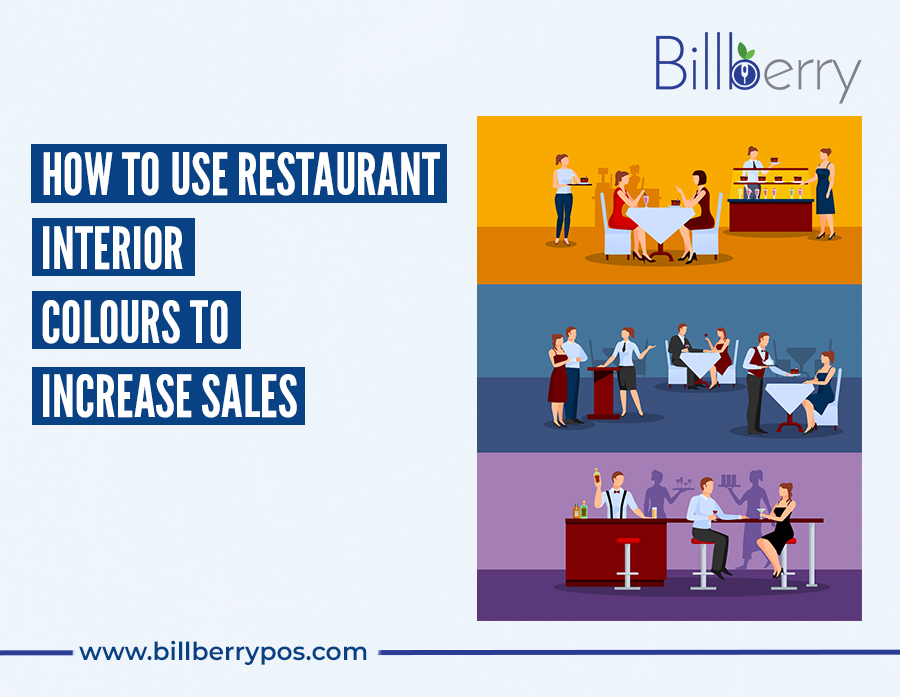
How To Use Restaurant Interior Colours Ideas To Increase Sales?

Restaurants rely on many factors to attract customers, including food quality, service, and atmosphere. One often overlooked aspect of a restaurant’s atmosphere is its interior colours. A study by the Pantone Colour Institute found that using bold and bright colours in a restaurant can increase sales by up to 80%. Let’s explore restaurant interior color ideas below!

Using bold and bright colours in a restaurant can increase sales by up to 80% – Pantone Colour Institute

Another study by Cornell University found that the colour red can increase people’s appetite and stimulate them to eat more quickly, which is why many fast-food chains use it in their branding and decor.

These studies have incessantly demonstrated that different wall colours for restaurants can have a significant impact on people’s emotions and behavior, and restaurants can use this knowledge to increase sales.

In this article, we will explore how restaurant interior colours can influence customers and provide tips on how to use them effectively.

Understanding Colour Psychology

Before we dive into specific colours, let’s first understand colour psychology.

It is absolutely true that colours can evoke different emotions and behaviors in people, and these associations can vary depending on cultural and personal experiences.

A study by the Pantone Colour Institute found that the colour blue is the most universally liked colour, making it a popular choice for restaurants looking to appeal to a wide audience.

The Psychology of Restaurant Interior Design, Part 1: Color

However, there are some general associations that are widely accepted. Here are a few examples:

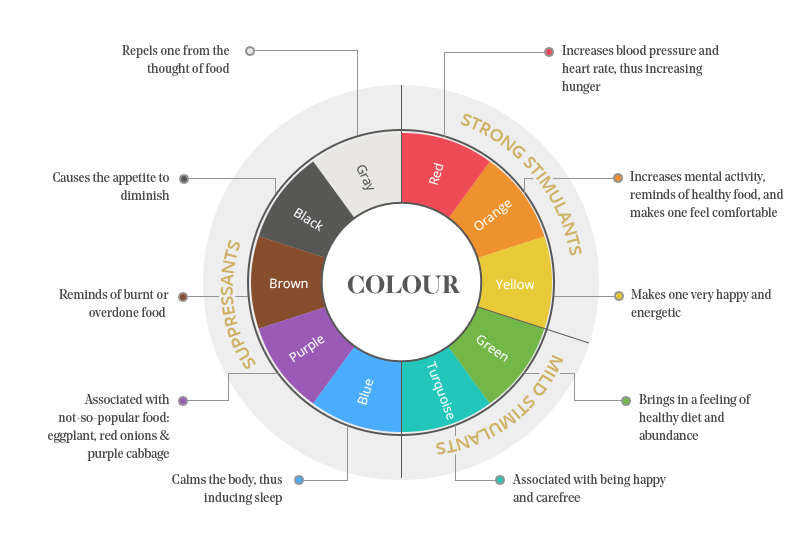
Red Colour 

This colour is often associated with excitement, passion, and appetite. It can increase heart rate and create a sense of urgency, making it a popular choice for fast-food restaurants.

Yellow Colour 

This colour is often associated with happiness, warmth, and optimism. It can stimulate the appetite and create a sense of friendliness.

Green Colour 

This colour is often associated with nature, relaxation, and health. It can create a calming effect and appeal to customers looking for healthier options.

Blue Colour 

This colour is often associated with trust, stability, and professionalism. It can create a sense of tranquility and appeal to customers looking for a more sophisticated atmosphere.

Orange Colour 

This colour is often associated with enthusiasm, energy, and excitement. It can stimulate the appetite and create a sense of warmth and friendliness.

Using Colours to Increase Restaurant Sales

According to a survey by Restaurant Business magazine, 85% of customers said that interior design and ambiance were important factors in choosing a restaurant.

85% of restaurant customers believe interior design and ambiance are important factors – Restaurant Business Magazine

Now that we understand some of the general associations with colours, let’s explore how restauranteurs can use this knowledge on restaurant wall design to increase sales. Here are some tips:

Brand Identity

The colours you choose should reflect your restaurant’s brand identity and values.

For example, a health-focused restaurant might use green to promote a sense of freshness and naturalness, while a trendy restaurant might use black and white to create a sense of sophistication.

Create Contrast

Using contrasting colours can make certain elements stand out, such as the menu or the bar area.

This can help draw customers’ attention to these areas and increase sales.

Use Accents

Rather than using one dominant colour, consider using accents to create a sense of depth and interest.

For example, a blue-themed restaurant might use orange accents to create a sense of excitement and energy.

Consider Lighting

Lighting can have a significant impact on how colours are perceived.

Dim lighting can create a sense of intimacy and sophistication, while bright lighting can create a sense of energy and excitement.

Cultural Differences

Keep in mind that colour associations can vary depending on cultural and personal experiences.

If your restaurant caters to a diverse audience, consider using neutral colours or consulting with a professional designer.

Conclusion

Colour psychology can be a powerful tool for restaurants looking to increase sales. By understanding the associations between colours and emotions/behaviors, restaurants can create an atmosphere that appeals to their target audience. The above restaurant interior color ideas can bring drastic change in your business!

By using accents, appropriate lighting, and contrasting colours for restaurants, any restaurant wall design can draw attention to key areas and create a sense of depth and interest. However, it’s important to be mindful of cultural differences and to stay true to the restaurant’s brand identity.

By following these tips, restaurants can create an inviting and appealing atmosphere that encourages customers to come back again and again.

Moreover, this article is curated by content experts at Billberry, the all-in-one Restaurant Management System that can entirely automate your restaurant operations to increase profits.

Book a free demo today to upscale your restaurant operations!

Top Restaurant Phrases and Expressions for Staff-Guest Conversations

If you’re planning on dining out at a restaurant where English is the primary language spoken, it can be helpful to brush up on some common expressions and phrases used at restaurants. Upscaling your restaurant English conversation by knowing the right expressions, phrases, and questions can make the entire dining experience with the restaurant staff much easier.

That’s why we’ve divided this article into 7 segments that will provide you with useful phrases for various situations you may encounter at a restaurant. From ordering food and drinks to asking for the bill, you’ll find a variety of expressions, phrases, questions that you can use to help you navigate the dining experience with confidence.

The first segment covers basic phrases you’ll need to know while making a restaurant reservation.

Restaurant POS Software – Free Demo

The second segment focuses on asking to be seated at the restaurant facility that will assist you with asking to be seated properly. The third segment covers asking for menu at a restaurant. The fourth segment provides expressions and phrases for asking questions about the menu.

waiter collecting order from the customer at an Indian restaurant

The fifth segment is all about expressing satisfaction by appreciating the food items served at the restaurant establishment. The sixth segment covers how to ask for the bill, while the final segment provides some useful phrases for asking for payment options that are accepted along with phrases for leaving the restaurant respectfully.

12 Creative Restaurant Menu Designs To Boost Sales

By learning these common restaurant English phrases, expressions, and questions relating to restaurant English conversation, you can feel more confident when dining out and make your experience at the restaurant much more enjoyable.

Phrases And Questions To Use While Making A Restaurant Reservation

  1. I would like to make a dinner reservation for four.
  2. We are planning to dine at your restaurant this Friday and we will need the reservation for the same.
  3. Do you have any private dining rooms available?
  4. Will there be any live music or special events during the time of our reservation?
  5. Can we bring our own cake or dessert for a special occasion?
  6. Is there a parking lot or valet parking available at your restaurant facility?
  7. Can the restaurant accommodate dietary restrictions or food allergies?

How To Ask To Be Seated Properly At A Restaurant?

  1. A table for two, please.
  2. I booked a table for four at 8PM under the name of Ross Geller.
  3. Could we have a table near the window, please?
  4. Do you have any tables outside?
  5. May we sit at this table?
  6. Is it possible to have a quieter table?
  7. Can you accommodate a larger group if we have more people joining us?
  8. Is there a time limit for the table, or can we stay as long as we want?

How To Ask For A Menu At Restaurant?

  1. Excuse me, could we see the menu please?
  2. Could you recommend any dishes? Or should we take a look at the menu first?
  3. Do you have a digital QR based menu?
  4. Can I see the dessert menu please?
  5. May I have a menu, please?
  6. Could you bring us the menu, please?
  7. Do you have a menu we could see?
  8. I’m sorry, but could we have a look at the menu?

Questions To Ask About The Menu At Restaurant

  1. What are your most popular dishes?
  2. Do you have any gluten-free options?
  3. What are the chef’s specialties?
  4. Are there any vegetarian or vegan options?
  5. Are there any spicy dishes on the menu?
  6. Can you tell me more about this dish and its ingredients?
  7. Is there anything you would recommend for someone who has never been here before?
  8. Do you have any specials or seasonal dishes available?
  9. Are there any local or regional specialties on the menu?

How To Appreciate Food At Restaurant

  1. I love the flavours in this dish.
  2. The presentation of this dish is beautiful.
  3. I’m really enjoying the texture of this dish.
  4. The ingredients in this dish complement each other so well.
  5. I can taste the freshness of the ingredients in this dish.
  6. The seasoning in this dish is spot on.
  7. This is the best dish I’ve ever had!
  8. The chef really has some exceptional cooking skills.

How To Ask For Bill At Restaurant?

  1. Excuse me, could we get the bill, please?
  2. I’m ready to pay, could we have the bill, please?
  3. Could you bring us the check, please?
  4. May we have the bill, please?
  5. Could you please split the bill between us?
  6. We are done eating. Could we have the bill, please?

How To Ask For Payment Options At Restaurant?

  1. Excuse me, could you tell me what payment options you accept?
  2. Do you accept credit cards for payment?
  3. Can I pay with card or is it cash only?
  4. Do you accept contactless payments like Apple Pay or Google Pay?
  5. Are there any fees associated with using a certain payment method?
  6. Can I split the bill between multiple credit cards?
  7. Is it possible to pay with a gift card or voucher?
  8. Do you accept foreign currencies or only local currency?

Conclusion

In conclusion, knowing useful restaurant phrases, expressions, and questions is crucial for customers when dining out.

These phrases can help customers communicate with the server, ask for recommendations, understand the menu, appreciate the food, and pay the bill.

What Is Hybrid POS System: Managing Data Both Online & Offline

By using polite and friendly language, customers can have a pleasant dining experience and enjoy their meal to the fullest.

Whether you’re a seasoned diner or a first-time restaurant goer, these phrases will help you navigate the restaurant experience with ease.

Remember to be courteous and respectful, and don’t hesitate to ask for help or clarification if you need it.

This article is curated by the content experts at Billberry that is an all-in-one Restaurant Management System catering restaurant businesses to flourish all over the globe. If you are a restaurant owner and want to upscale your business, then must contact us today!

Restaurant Management System – Free Demo

Future Of Restaurants With The Elements Of Augmented Reality In Restaurant Menus

According to a report by Statista, the number of mobile augmented reality (AR) user devices worldwide is projected to reach an estimated 1.7 billion by the year 2024, marking a significant increase of 1.5 billion from the figure of 200 million recorded in 2015.

This rapid expansion reflects the growing prevalence of AR technology and its potential for revolutionizing various industries, including entertainment, retail, and education.

As the sophistication of AR devices continues to improve, more consumers are expected to embrace this technology, creating a massive market for AR-enabled applications and services.

These trends underscore the importance of businesses and organizations to incorporate AR technology in their operations and offerings to remain competitive and meet the evolving needs of their customers.
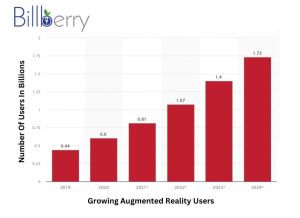
chart depicting growing number of augmented reality users

According to Mr. Jatin Singh, a restaurant industry analyst, the integration of augmented reality (AR) elements into restaurant businesses can significantly enhance the dining experience for customers.

By offering 3D renderings of dishes, and even enabling virtual trials prior to ordering, the incorporation of AR technology can create a highly interactive ordering process.

This innovative approach provides customers with a more comprehensive understanding of the menu offerings and enables them to make informed decisions.

The incorporation of AR technology in the restaurant industry can ultimately lead to a more satisfactory dining experience for customers and result in increased sales.

Useful Restaurant Phrases, Expressions, And Questions For Customers – Restaurant English Conversation Guide

By using AR to enhance the menu presentation and provide virtual taste trials, restaurants can create a unique, engaging and memorable experience that differentiates them from their competitors.

These trends highlight the potential of AR technology to transform and revolutionize the restaurant industry, catering to the evolving needs and expectations of customers.

Restaurant Management System – Free Demo

What Is Augmented Reality?

Augmented Reality (AR) technology enhances a person’s physical world experience by superimposing digital information over it, ultimately leading to increased restaurant sales.

Unlike Virtual Reality (VR), which replaces the real world with a simulated one, AR adds an extra layer of computer-generated images and sounds to the existing environment.

AR can be experienced through a variety of devices, including smartphones, tablets, and AR glasses, and it has a wide range of applications in areas such as hospitality, gaming, education, advertising, and manufacturing, among others.

12 Creative Restaurant Menu Designs To Boost Sales

The primary objective of AR is to provide a seamless and natural experience that blends the virtual and physical worlds to create new, enriched experiences for the user.

By integrating AR elements into the restaurant industry, businesses can provide their customers with a more engaging, interactive and personalized experience, resulting in increased restaurant sales and greater customer satisfaction.

customer using augmented reality at restaurant
Image Source: PEXELS

The AR (Augmented Reality) Opportunity for Restaurants

The restaurant industry can greatly benefit from the integration of the elements of Augmented Reality (AR) technology if used effectively, says Mrs Karishma Patel, a restauranteur with years of industry experience.

Augmented reality is transforming the restaurant sector and has the ability to enhance the customer experience by providing interactive menus at the restaurant facility. This technology can also help restaurants stand out from the competition by offering unique and memorable experiences.

In addition, Mrs Karishma believes, AR can streamline operations by providing real-time data and information to staff, such as customer preferences and order details which can be later used in upscaling restaurant operations.

The Journey Of Swiggy and Zomato Logo – Billberry

The elements of AR incorporated in the restaurant business can also provide insights into customer behavior and preferences, allowing restaurants to make data-driven decisions to improve the customer experience.

Furthermore, Augmented reality in restaurants can help to increase customer engagement and loyalty by providing ongoing entertainment and exceptional restaurant dining experiences.

In near future, the augmented reality holds surreal power to erupt as a potential feature among the other essential restaurant management system features.

The AR opportunity for restaurants is vast and can lead to significant improvements in both the customer experience and overall business success.

Restaurant Management System – Free Demo

Transform Restaurant Menus With Augmented Reality

Along with other modern restaurant features like QR code based food ordering, augmented reality in restaurants can revolutionize the way restaurants present their menus to customers.

With AR, menu items can be brought to life through interactive 3D images, videos, and animations that showcase dishes in a new and exciting way.

Incorporating AR technology in restaurant menus can also provide customers with additional information, such as ingredient lists and nutritional information, enabling them to make more informed decisions about what to order.

This innovative approach allows for a more dynamic and interactive dining experience, reducing the guesswork for customers and increasing their level of engagement.

Furthermore, the AR elements incorporated into the restaurant business can help to minimize waste by allowing customers to preview dishes before ordering and make adjustments to their order in real-time, resulting in more accurate and efficient order placement.

10 Top Restaurant and Cafe Interior Design Themes To Try In 2023

The adoption of AR technology in the restaurant industry has the potential to significantly enhance the customer experience, driving increased engagement and loyalty.

By transforming traditional menus into dynamic, interactive experiences, restaurants can differentiate themselves from competitors and increase sales.

Early adoption of this technology in the restaurant industry could yield substantial rewards and position businesses at the forefront of this evolving trend.

picture of customer sitting at restaurant table
Image Source: PEXELS

New Item Launches At Restaurant With AR

Augmented reality is proving to be a powerful tool for restaurants seeking to launch new items and dishes.

Through the use of AR, restaurants can create exciting and interactive experiences that effectively showcase their latest offerings in a unique and memorable way.

This approach can be highly effective in building anticipation and buzz around new menu items, ultimately leading to increased sales.

Furthermore, AR can be leveraged to provide customers with behind-the-scenes information about the creation of new dishes, thereby making the launch more personal and engaging.

In addition, AR can be used to create gamified experiences that incentivize customers to try new menu items and share their experiences with others, further amplifying the excitement and engagement around the new offering.

What Is The Concept Of Cloud Kitchen?

By integrating AR technology into their new item launches, restaurants can differentiate themselves from competitors and leave a lasting impression on customers.

The potential benefits of using AR for new product launches are vast, and forward-thinking restaurants that embrace this technology are likely to see positive results.

Equipping Restaurant Staff With AR Training

To ensure the successful implementation of augmented reality menus in restaurants, it is crucial that restaurant staff receive thorough training that provides a comprehensive understanding of the technology and its benefits.

The training should introduce staff to the concept of augmented reality and how it can enhance the dining experience for customers, as well as provide practical instruction on the setup and use of the AR menu software.

This may include training on software installation, familiarization with the user interface, and effective use of the technology to provide an interactive and engaging menu experience.

Café Vs Restaurant: Understanding The Difference

In addition, staff training should include troubleshooting and customer support to address any issues that may arise while using the AR menu.

Ongoing training and updates on the technology can help ensure that staff remain up-to-date and confident in their ability to use the AR menu technology effectively.

AR Menu Roadblocks In The Restaurant Industry

The integration of augmented reality menus in the restaurant industry may encounter several obstacles that could hinder their adoption.

Foremost among these challenges is the high cost of investment in AR technology and software, which may be unaffordable for some restaurants.

Moreover, the lack of technical expertise among restaurant staff may pose a difficulty in the installation, management, and troubleshooting of the AR menu system.

Technical glitches and malfunctions may further disrupt service and cause inconvenience for customers and staff.

How To Create A Restaurant Management Checklist

The use of AR technology also raises concerns about the privacy and security of customer data, as their information is collected and stored by the system.

Additionally, there may be resistance to change from customers who are more comfortable with traditional menus, and may not be familiar with AR technology.

Addressing these challenges requires the development of strategies that focus on finding cost-effective AR solutions, increasing technical knowledge and support among staff, ensuring data privacy and security, and managing customer expectations and preferences.

Conclusion

In summary, the incorporation of augmented reality in restaurant menus represents a significant advancement for the future of the dining industry, offering a one-of-a-kind and interactive experience for customers, which provides them with an in-depth understanding of menu items and their constituents.

Furthermore, it presents a unique opportunity for restaurants to strengthen their brand, increase customer engagement, and boost sales.

Given the burgeoning popularity of AR technology, it is only a matter of time before augmented reality menus become ubiquitous in dining establishments worldwide.

This cutting-edge development not only enhances the dining experience but also has the potential to transform the way we interact with menus and food.

Moreover, this informational article is fabricated by the content experts at Billberry that is an all-in-one restaurant management system that is equipped with all the latest technology that is needed by a restauranteur to skyrocket their business to another level.

Take a glance at how our platform’s immense capabilities by scheduling a free demo today and learn how incorporating it into your business can upend your entire restaurant operations for good!

Restaurant Management System – Free Demo


6 Challenges of Starting Fine Dining Restaurant in 2022

One of the most affected establishments during the COVID-19 pandemic is restaurants.

Because of some business restrictions, they were forced to shift to off-premises channels and focus on food deliveries.

Even certain services are made online, such as catering to customer orders and preferences and accepting payments at fine dine restaurants.

Restaurant Management System – Free Demo

According to a report by the National Restaurant Association, it would be a year or more before restaurant business conditions return to normal.

Moreover, 51% of customers admit they aren’t eating at restaurants as often as they like now compared to pre-pandemic.

These uncommon circumstances require innovative technologies to fight covid-19.

With these facts and statistics, the question lies: what are the challenges for restaurant owners?

How to start a restaurant business is a thought that comes to mind when you’re looking to start a fine dine restaurant and keep your business going this year, scan through these biggest challenges facing restaurant industry 2022.

Before everything make sure you have the best restaurant management system to back you up.

1. Going Digital

With local business restrictions ongoing and more people turning digital for their needs, establishments must strive to increase their online presence.

When starting a fine dining restaurant, make sure you have an active and accessible website displaying all your products and services.

You should also be visible on top social media sites like Facebook and Instagram.

Some businesses do affiliate marketing where another person or affiliate will promote and sell your products for a wider reach.

Influencer collaborations can be possible, but make sure you select the most suited creators.

Lastly, restaurant owners should maintain good online reviews whether on third-party sites or on their website and social media pages.

Going digital doesn’t only mean your business is visible and accessible online after starting restaurant business.

It should also have an effective digital marketing strategy to reach the right people and provide a seamless customer experience.

2. Keeping Up with Health and Sanitation Requirements

The COVID-19 pandemic has led people to be more aware of health and sanitation.

With this, restaurant businesses are also expected to abide by government-imposed health and sanitation requirements and certain restrictions. 

For example, a restaurant can’t operate without proper ventilation and disinfectants.

There should also be regular cleaning and inspection of kitchen areas, dining areas, and restrooms.

Moreover, employees are required to maintain good personal hygiene, such as frequent hand-washing, changing uniforms after every shift, and wearing proper headgears and face masks. 

Moreover, you can opt for a restaurant management system, a franchise management solution or a simple point of sale software ( Restaurant POS SOFTWARE) like Billberry that provides you the feature of having a QR Code based menu to enable contactless food ordering system.

Take the opportunity to entice your customers by providing them a safer dining experience.

3. Emphasizing on Takeout and Delivery

Familiar with Swiggy, Zomato Order, Uber Eats, and Foodpanda?

These are all food delivery services that are continuing to rise in 2022.

As mentioned above, customers nowadays prefer a contactless delivery than dine-in physically at restaurant establishments.

Sure, the actual dining experience would be lovely, but COVID-19 has changed the scheme. 

Hence, it’s essential for restaurants to shift their services to takeout and delivery.

Aside from being present on food delivery apps, you must also have an active hotline so customers can contact you anytime.

You may also assign your staff to manage all social media and website inquiries and orders. The best franchise software could help aligning such operations.

With this, you’ll be more likely to engage with your customers on all platforms.

Doing so will increase your sales and revenue and will impose a positive impression on your customers. 

4. Meeting New Customer Demands, Preferences, and Expectations

Consumers aren’t only expecting fine dining restaurant businesses to be available online, but they’re also seeking variety and new types of food choices.

This customer behavior is mostly influenced by social media—what with all the innovative and exotic dishes introduced on Instagram, YouTube, or Pinterest. Using the best CRM tools can help you understand your customers better, which you can integrate to your restaurant management tools. 

Food bloggers have also influenced the tastes and preferences of customers.

For example, most teenagers fancy South Korea’s samgyeopsal.

Meanwhile, millennials look for different coffee or milk tea flavors.

The older generations also prefer healthy dishes, such as foods with organic, vegan, or gluten-free options. 

Restaurant Management System – Free Demo

If you want your restaurant business to stand out, you must explore new and creative dishes.

Make them as exotic as you can while promoting health and wellness. Also make sure that your restaurant billing software allows you to add add-ons and variations according to customer preferences to your menu items.

You may focus on a particular cuisine depending on your target market, or it can be a mixture of signature dishes across different continents to add more variety to your menu. 

5. Generating Enough Revenue

One of the top challenges in opening a restaurant is generating enough revenue.

With this, restaurant owners should ensure that there’s accurate and profitable menu planning and pricing and that there should be balancing costs of providing delivery with profitability.

Inventories should also be managed well to prevent spoilages and product depletions. 

Most importantly, restaurant businesses should stick with an efficient digital marketing strategy.

Determine your target market well and promote your products and services on the right platforms.

Adjusting to increasing food costs can also be helpful to manage your overall finances and make sure you get good sales and revenue. 

6. Recruiting, Training, and Retaining Employees

Restaurant businesses may be going digital, but employees are still valuable to the company’s overall success.

Hence, you should provide proper training to your employees and help improve their customer service by investing in the best restaurant management software.

Defining “best” isn’t what’s the most popular or most expensive, but what matches your needs best. With this, your restaurant operations will be automated and more convenient. 

Investing in your employees can be a risk, but when done right, you can recruit and retain the best ones.

A well-trained team matched with the right tools and software can improve your restaurant workflow and will take your business to the next level. 

Facing the Challenges and Opportunities in the Restaurant Industry

There’s no one-size-fits-all solution to problems.

However, by looking forward to 2022 and staying ahead of operational challenges, your fine dine restaurant business can still be successful and profitable by the end of the year and in the coming years.

Just stay updated with the best tips and trends and pin your restaurant on the brand new map of business and economy.

Restaurant Management System – Free Demo

HOW TO START A SWEET SHOP IN INDIA

Sweets are not just food in India, they’re an emotion. From festivals and weddings to everyday indulgence, the love for sweets runs deep across all corners of the country. So, if you’re thinking to start a sweet shop, you’re tapping into a timeless tradition and a business with enormous growth potential.

But behind those mouth-watering displays lies a competitive, fast-moving industry. To truly succeed, you need more than a love for sweets, you need a strong foundation.

In this article, we’ll walk you through the essential steps to open a successful sweet shop in India.

Why Start a Sweet Shop Business?


Everyone loves sweets, but not everyone turns that love into a profitable venture. Starting a sweet shop offers you the chance to:

~ Be part of every celebration in your customers’ lives.

~ Build a brand that becomes a household name in your area.

~ Start small and scale into multiple outlets or a franchise.

But remember, sweets are perishable, and the market is crowded. You’ll need the right mix of planning, location, product quality, and technology to stand out.

Step 1: Create a Solid Business Plan


A well-structured business plan is your first step toward success. Here’s what to include:

~ Business Type: Decide if you want a traditional sweet shop, a modern boutique-style dessert studio, or even a hybrid with seating and snacks.

~ Production Setup: Will you prepare sweets in-house or source them from established vendors?

~ Sales Channels: Plan if you’ll sell offline only, or integrate with online aggregators like Zomato, Swiggy, or your own website.

~ POS Software: A smart Sweet Shop POS software like Billberry can integrate your online and offline orders while managing inventory and billing.

~ Seating or Takeaway: Decide whether you’ll offer dine-in space or stick to takeaway/delivery only.

~ Business Size: Outline your initial size, workforce, and product range. Starting small and scaling smart is always wiser.

📌 Pro Tip: Since sweets can’t be stored for long, managing production and inventory efficiently is critical to reduce waste and maximize profit.

Step 2: Choose the Right Location


Location can make or break your business. Look for:

~ High Footfall Areas: Busy markets, near schools, offices, or main roads.

~ Visibility: Make sure your shop can be easily seen and accessed.

~ Competitor Analysis: Avoid opening next to well-established sweet shops unless you offer something distinctly different.

Also, ensure your space can accommodate:

1. Kitchen & storage

2. Display counters

3. Billing area

4. Seating, if needed

And don’t forget to consider a professional website for your sweet shop to attract digital audiences.

Step 3: Plan Your Budget & Arrange Funding


Starting a sweet shop requires investment for:

1. Equipment

2. Interior setup

3. Raw materials

4. Staff salaries

5. Licenses & marketing

If you need financial assistance:

~ Apply for loans through MSME schemes (especially if you have prior experience).

~ Approach banks or NBFCs with a solid business plan.

~ Explore private lending options—just be sure to understand interest terms carefully.

✅ Always plan for working capital to manage your day-to-day operations, especially during the early months.

Step 4: Franchise or Build Your Own Brand?


This decision depends on your risk appetite and business vision:

📍 Start Your Own Brand
Pros:

~ Full control over product, brand, and pricing

~ Opportunity to build a unique identity

Challenges:

~ You’ll need to handle marketing, product development, and branding yourself

📍 Buy a Franchise
Pros:

~ Ready-made brand recognition

~ Training & support from the franchisor

~ Lower marketing burden

Challenges:

~ Franchise fees, royalty, and limited creative freedom

👉 Many franchises also provide in-built POS and inventory software to make operations easier.

Step 5: Get the Required Licenses & Registrations


Starting a sweet shop legally requires multiple licenses. Here’s a quick list:

~ FSSAI License (mandatory for food businesses)

~ GST Registration

~ Health & Trade License from your local municipality

~ Fire Safety Certificate

~ Shops & Establishment License

📄 If your shop is on rented property, you’ll also need commercial usage permission from the landlord.

Step 6: Buy Essential Equipment


Your equipment will depend on the types of sweets you offer. However, common items include:

1. Refrigerators & freezers

2. Gas stoves, burners, and mixers

3. Sweet display counters with temperature control

4. Weighing scales

5. Packaging materials

6. Billing machine and POS system

💡 Choose a POS system that supports weight-scale integration, helps you manage recipes, staff, customer data, and online orders. A sweet shop POS like Billberry simplifies operations, tracks daily sales, and even manages multiple outlets.

Step 7: Curate a Menu That Sells


Don’t go overboard initially. Start with crowd favorites and a few signature items:

~ Milk-based sweets (Kaju Katli, Rasgulla)

~ Dry fruit mithais

~ Regional specialties

~ Fusion sweets (like chocolate barfi, gulkand laddoo)

Make sure:

~ All products are fresh, consistent, and hygienic

~ You avoid overstocking items that don’t sell often

~ Menu leaves room for seasonal specials and experimentation

Step 8: Hire the Right Team


~ Your team defines your quality.

~ Experienced sweet makers (halwais) who know traditional methods

~ Billing staff who are tech-savvy and courteous

~ Helpers for packaging, delivery, and upkeep

Also, provide staff with proper uniforms and hygiene protocols. An efficient BillBerry’s Sweet Shop POS system can help you track employee shifts, productivity, and salary distribution.

Step 9: Understand Your Customers


Your customer data is your goldmine. Keep track of:

1. Best-selling items

2. Repeat customers

3. Feedback and complaints

4. Use a restaurant CRM system like Billberry to:

5. Run loyalty programs

6. Offer birthday discounts

7. Send SMS/WhatsApp offers to regulars

8. Analyze data to introduce new sweets based on seasonal demand

The Conclusion

If you want to effectively invest your time and money, you must do it gradually because there is no quick way to build a profitable business.

Having patience is the key, when you will start a sweet shop profit margin will increase over time.

The actions outlined above are excellent preparation to successfully start a sweet shop business that will pay off in the long run.

Contact BillBerry’s Sweet Shop POS Team!

Sweet Shop POS Software – Free Demo